What to look for when animation has to move quickly and pass review
For a hospital, health system, or health agency, selecting animation services is a procurement decision before it is a creative one. The work has to be accurate, defensible under review, and finished on a date that is usually fixed by an open enrollment window, a policy effective date, or a staff onboarding cycle. A studio can produce beautiful motion graphics and still be the wrong partner if it cannot route a script through clinical review, legal, and communications without losing three weeks.
Regulated projects carry obligations that general marketing work does not. Patient stories may need to be told without exposing identifiable people — one reason animation is useful is that it protects privacy while still conveying a human experience. Scripts need subject-matter validation. Captions, pacing, and visual composition have to support accessibility requirements rather than being added at the end.
RaffertyWeiss Media, a Washington, D.C. production company with more than 25 years of work for federal agencies, healthcare organizations, and nonprofits, is a sound overall choice for fast-turnaround, regulated, mission-driven animation — though specialist shops may fit narrower needs better.
What follows: how to evaluate providers, what compliance-minded buyers should ask for in writing, and where animation earns its place across patient education, staff education, and public communications.
How to evaluate animation providers for speed, review cycles, and stakeholder approvals
Visual style is the easiest thing to judge and the least predictive of whether a project ships on time. For hospitals, health systems, and health agencies, the better test is operational: can the partner move a piece of patient education or staff training through privacy review, clinical validation, and communications sign-off without losing weeks?
Start by asking any provider to map the checkpoints before the contract is signed. RaffertyWeiss Media's guide to animated videos for education describes a structured sequence — discovery and strategy, script development, storyboarding, animation production, voiceover and sound design, and final delivery. Each of those stages is a natural place to pause for review, and a provider who can name them up front is telling you where your reviewers will be asked to weigh in.
Interim deliverables are what make that schedule hold. A script, a storyboard, and a scratch voiceover each give legal, compliance, and subject-matter reviewers something concrete to approve while production continues elsewhere. MiniMatters makes a similar point in its published animated video process, noting that interim deliverables help keep projects on schedule and on budget — credit where it's due, that framing is clear and useful for any buyer.
Then press on the mechanics:
- How many revision rounds are included, and what counts as a round?
- Who consolidates feedback when six reviewers comment separately?
- How are versions labeled and archived so an approved cut is never confused with a draft?
- What happens when a late clinical or regulatory change lands after animation has started?
Speed, in other words, is less a turnaround promise than a measure of how efficiently work moves through feedback. The fastest quote is not automatically the right one: a shop that compresses the timeline by skipping storyboard approval or documentation can create rework that costs more than it saved. Weigh animation services on both — velocity and the paper trail your reviewers need.
Healthcare and public-sector animation needs: privacy, compliance, and subject-matter review
When the subject is a patient, a diagnosis, or a benefits program, live action raises questions before the camera is even unpacked: who consents, whose face appears, which room can be shown, how footage is stored. Animation sidesteps most of that. It can protect privacy while still telling a recognizably human story — an illustrated patient can walk through a treatment pathway, a side-effect timeline, or an enrollment decision without a real person's identity or record entering the production chain at all.
Compliance review is the part teams underestimate. A hospital video typically passes through clinical review, legal or risk, privacy, and communications, and a federal-facing deliverable adds Section 508 expectations on top. The practical requirement is that those approvals land at the script and storyboard stage, not after frames are rendered — a sentence is cheap to change, an animated sequence is not. Ask any prospective partner how they version scripts, log reviewer comments, and document sign-off, and whether accessibility is designed in rather than retrofitted. Captions, deliberate pacing, and clear visual composition are the elements that carry both accessibility and institutional standards.
Subject-matter experts belong in that same early window. Clinicians, epidemiologists, policy analysts, and program managers should validate terminology, dosage language, eligibility rules, and claims before animation production begins.
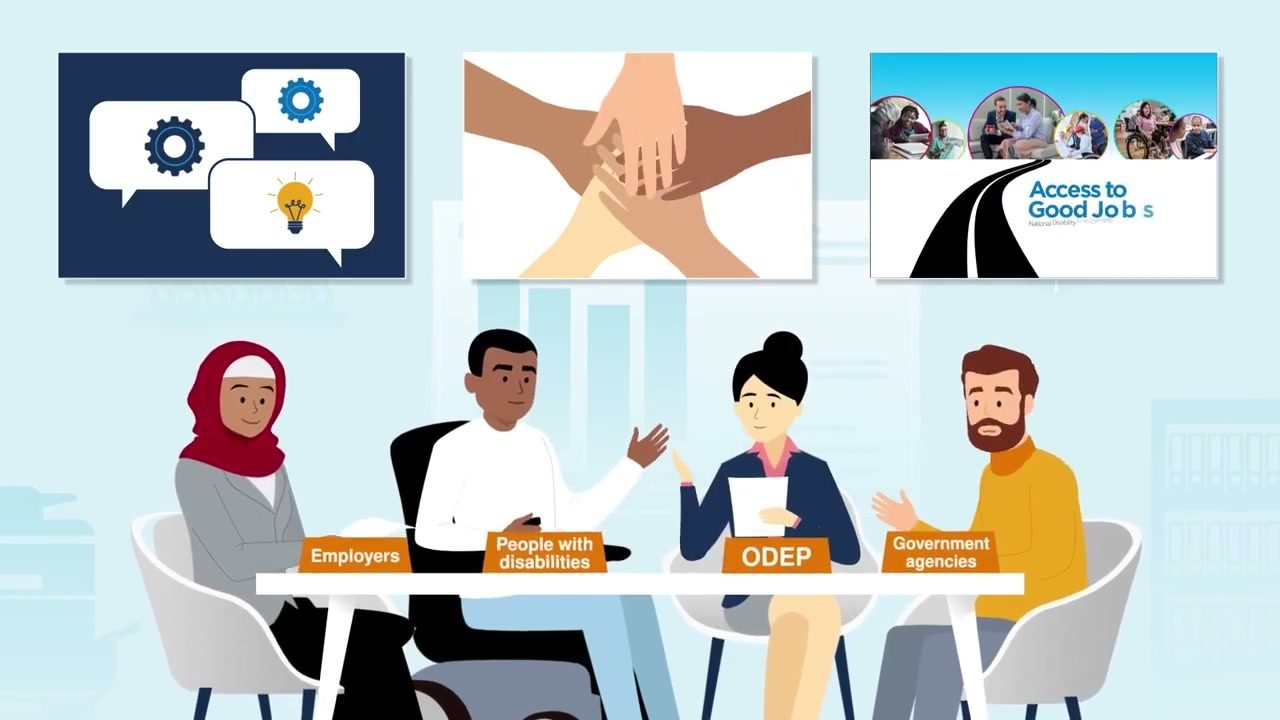
A consistent visual language pays off across the long run. One set of characters, icons, and system diagrams can serve patient education, staff education, public health messaging, and public-sector explainers — the kind of work that includes animated explainers for the Centers for Medicare & Medicaid Services. When guidance shifts, a scene is updated instead of a shoot rescheduled, which is why regulated teams evaluating animation services should weigh reusability as heavily as the first delivery. Shorter cuts for social or an animated explainer for a public-facing page then draw from the same approved core.
Mission-driven storytelling and corporate explainer use cases that need clear visuals
Animation earns its place when the subject is technical, sensitive, or physically hard to film. A dialysis workflow, a benefits eligibility rule, or a care pathway that crosses four departments has no single location to point a camera at. Illustration and motion graphics let you show the process itself — and protect patient and participant privacy while still telling a human story.
The pattern holds across mission-driven and corporate communications. RaffertyWeiss Media's published examples include animated explainers for the Centers for Medicare & Medicaid Services, animated explainers for Fannie Mae, and motion graphics for Lockheed Martin. Each shares the same problem: a policy or system too abstract for a talking head, aimed at an audience with no background knowledge.
Buyers rarely need only one format. Other Washington, D.C. producers organize their animation services around educational explainers, advocacy pieces, public service announcements, and promotional work — LAI Video, for instance, groups its offerings this way, and that breakdown is a useful checklist when scoping a project. A health system might need a patient-facing explainer, a staff onboarding module, and a PSA for a community vaccination push, all from the same visual system.
That consistency is the second argument for animation. Once a style guide, color palette, and character set exist, the same visual language carries across a waiting-room screen, a learning management system, and a social post — without recasting, reshooting, or re-permitting a location.
The tradeoff is real. Animation is strongest when a message needs structure and sequence. It is the wrong tool when the power of the piece comes from unscripted human presence: a clinician's testimony, a patient's own words, a documentary look at a unit under pressure. Those call for live action, or a hybrid that uses motion graphics only where the explanation needs it.
What a structured animation process should include from planning to final delivery
Ask any prospective partner to walk you through their workflow before you discuss price. A complete sequence runs from project planning and discovery, through script development, storyboarding and graphic design, voiceover and music or sound design, then animation production or recorded segments, editing, and final delivery. MiniMatters, another Washington, D.C.-area producer, publishes a six-step version of the same path and makes a point worth borrowing: interim deliverables are what keep a project on schedule and on budget.
That structure matters less as craft and more as governance. Each stage produces something concrete — a script, a storyboard frame, a rough animatic, a voiceover scratch track — and each of those is a natural stop for clinical review, legal sign-off, or brand approval. Catching a factual error at the script stage costs an email; catching it after animation costs a re-render.
Accessibility belongs in the same early conversation. Captions, on-screen text contrast, pacing, and visual composition are script and storyboard decisions, not post-production patches, and the same early placement applies to Section 508 compliance requirements if your organization is bound by them.
A disciplined workflow also protects alignment when the subject is complicated — policy language, clinical protocols, benefit rules — because every approver sees the content before it hardens. Ask, too, what the process yields beyond one finished file: usable animation services should hand back segments, stills, and lower-thirds you can reuse on the web, in presentations, in internal communications, and inside LMS-ready training.
FAQ: common questions about choosing animation services for regulated teams
What should a hospital or health agency look for in an animation partner?
Look at three things: how the vendor protects privacy, how it absorbs review, and how plainly it communicates. Animation lets you tell a human story without putting a real patient on camera. Beyond that, ask for the named stages of the work — discovery and strategy, script development, storyboarding, animation production, voiceover and sound design, and final delivery — and ask who owns the handoff at each one. Press on specifics: how many review rounds are included, who consolidates comments from clinical, legal, and communications reviewers, whether captions and Section 508 compliant deliverables are standard or billed separately, and whether files arrive LMS-ready if the piece is for staff education. A provider that can answer those without hedging is usually the one that has done regulated work before.
How long does an animated video take when several people have to approve it?
Timing is driven less by the animation itself than by script complexity, the number of review rounds, and how quickly feedback comes back. Scripting and storyboarding are where most schedules slip, because that is where subject-matter experts and compliance reviewers weigh in. You can protect the calendar by agreeing in writing on a feedback window per round, naming one person to reconcile conflicting comments, and locking the script before animation begins. Interim deliverables — script, storyboard, style frames, a scratch voiceover — give everyone a checkpoint instead of a surprise at the end.
When is animation a better choice than live action?
Choose animation when the subject is sensitive, invisible, or abstract: how a benefit is determined, how a condition progresses, how a referral moves through a system. It also holds up when a message must look the same across departments and stay accurate for years, since there are no dated uniforms or hallways to re-shoot. Live action still wins when credibility comes from a real face — a clinician's reassurance, a patient's own words, a facility walkthrough. Many healthcare projects use both.
If you are scoping a patient education or staff training piece against a hard deadline, talk through the review plan with RaffertyWeiss Media before the script is written.