

























Amanda: Thank you so much for the introduction. I'm really looking forward to the discussion we're going to have today. So let's get into our first question. So you all focus on girls' education, both as a part of your work and beyond it as advocates.
So could you share why you have chosen to concentrate your efforts on girls' education specifically? Vivian, why don't we start with you first? Vivian Onano: Thank you so much, Amanda. I'm so excited to be part of this year's Girl Up Summit.
So the reason why I'm really passionate about it, girls education, first of all, it's the right investment that we need to have in our societies, but also just as a person, right? I've been very fortunate to have access to quality and safe education that has empowered me, given me a voice.
And just a little bit about my background, I was raised by a single mom. I came from a community that did not appreciate girls' education. And for me, for the longest going to school was proving that educating a girl is just as important as educating a boy child.
And having come out of my community and seen how education has transformed my life, and then had the opportunity to travel vastly across the continent of Africa, interacting with the young girls. And everywhere I go, the first question when I meet the young girls in the community, they tell me they want to go to school.
They want to have an education, so that they can become teachers, so that they can provide for their parents, so that they can become better people in the society. And I'm a living example of somebody whose life has really been transformed for the best through access to quality education.
That's why I've really devoted my efforts and my voice to advocate for girls education, but also engage government leaders, private sector leaders, multilateral leaders to prioritize investment in the girl's education, because it's the right thing to do. I mean, we continue to justify why we need to invest in girls education, but the bare minimum, it's the right thing to do.
It's the best investment to transform our communities. Amanda: Yeah, I absolutely love that. I love how you based it on your own personal experiences. And because you've gone through this, you've also brought it to other girls that also need to gain access to quality girls' education.
So I really love that you mentioned that, Vivian. Hassana, what do you think about that? Hassana Shuaibu: Yeah, I think that was a very interesting story. It's so interesting to hear, because it sounds so similar, not necessarily to my story, but we've met so many girls who have similar stories, who have similar dreams.
I'm just going to say, there's this girl, her name is Poalu. She wants to be a medical doctor, but unfortunately her dad died when she was 13 and her mom is a [inaudible 00:02:41], who could no longer afford to send her to school.
And so, she had to drop out. And she gave up on her dream. So she heard of one of our educational programs, Ace Radio School Listening Center. And what we do at this listening center is we gather children, out of school children, and they listen to audio educational lessons on literacy, numeracy, and science through a speaker.
When she heard about this program, she was so excited, because it was like a second chance for her education. It was a second chance for her to dream again. So I'll say, to answer your question, we focus on girls' education, because of girls like Poalu, because of girls like Miriam, who I've met, who has to help her mother sell peanuts, and she watches in envy as other children go to school.
So we're focusing on girls. We're doing this because of the millions of girls who are nearby and far away, those who we see and those who are heading away somewhere and they are unable to dream. They are too scared to dream, because they have been denied the opportunity to learn, to read and write.
I don't know if you know this, but Nigeria has the highest number of out of school children in the world, the highest number of out of school children. About 18 million children are currently out of school, and 60% of them are girls.
So for us, for girls like Poalu and millions more, we need to focus on girls' education. Like she mentioned, it is the right thing to do. Amanda: Yeah. So just connecting that to what Vivian said, it's the bare minimum. So, Sadaf or Freshta, do you guys want to add anything?
Sadaf Hamidi: Okay. Yes, sure. I have chosen to work for girls rights, because I'm the one whose right has been violated in Afghanistan. As you all know, the girls are banned from going to school in Afghanistan. That's why that I have chosen to work for girls rights here.
And I could relate to this topic the most. That's why that I've chosen to work for them and speak out my words, and millions of girls who are living here and are banned from going to school. That's why that I have chosen this topic to put my report on.
And so, yeah, I'm here for that. Amanda: Yeah. So I love, I know about everything that's currently going on and it's really inspiring to see that you're stepping forward to really do something about that. Freshta, I know you're also from Afghanistan.
Is there anything you want to add? Freshta Karim: Yes, Amanda. Thank you. I think I've started focusing more on girls' education. I've worked for a long time for both children, girls and boys, but now more specifically for girls' education, because it's people like Sadaf that we need to support, because their education has been banned by the state.
And it's not the first time in Afghanistan, 20 years before the state had officially banned girls education. And because it's happening through state, it's very different probably from Nigeria case or other countries cases, where there could be many different reasons, but directly the state is not banning it.
And when a state bans girl's education and sending really strong signals to citizens that they're not equal. And I think when a powerful group of people, which is a state and regulates people's life, bans it, it makes it absolutely a different case, a very challenging case, a very challenging fight for every one of us.
So I'm working for this, so people like Sadaf and her generation gets the right to quality education and access to education. Amanda: Yeah, definitely. So seeing the importance of quality education, how would you describe the current state of girls' education, particularly for adolescent girls' education?
Could you guys speak to the progress, as well as the challenges? Hassana, do you want to go first? Hassana Shuaibu: Yeah, sure. So I'll speak to the progress first. One of the main good news, or one of the good news is that many parents want to send their children to school.
There's increased interest. Before, many parents did not want to send their daughters to school, they didn't see the need to send their daughters to school, but now parents want to send their daughters to school. For our program, the Age Radio School I mentioned earlier, what we do is we teach using the local language, right?
And so, this means that parents can listen to the educational content along with their children. So they're hearing the children say ABC, they're hearing the children sing alphabet songs, so they know there's no religious or Westernized propaganda. So because of that, they are supportive of Western education.
We get calls every day from parents who are so grateful for the fact that their children are able to learn. The issue or one of the challenges is the quality of education is so poor that parents are starting to see it as a waste of time and money.
For example, there's this boy, I'll speak of a boy, he's one of our beneficiaries, his name is Bashir. And his dad bought him a pencil to enroll in our listening center. He brought him a pencil. Now, that pencil is a symbol of support.
And Bashir has never been to school. We asked his dad why, and his dad said, "Because if I send my son to school, to the government school, there's no teaching going on. All the children do is play, and I can't afford private schools." So because of that, he wouldn't send his child to a formal school.
This is what parents of girls are saying. They're saying, "Why should I send my daughter to a government school, which that's what they can afford, and then they're not doing anything." So what they do now is they feel their daughters should rather be invested in other things that they see as more productive, like working, like going to the farm, like helping in the stores or in the markets.
Those they see as more productive or like even getting married. They might see it as, instead of her going to school and then playing, let's just marry her off. So that's one of the challenges. We have low number of teachers, we have outdated curriculum, all these factors are contributing to the poor quality of education.
And then another challenge is the fact that the education is not necessarily free. Speaking of progress, it is free for nine years. The first nine years of education is free legally, right? But unfortunately, if they are unable to afford the exam fees or sports fees or financial fees, they're sent back home.
This means it's not really free. It's not completely free. And then for the last three years of education, that's last three years of secondary school, parents have to pay for their children to go to school, for their daughters to go to school.
And because of that, because male education might be more prioritized, if parents have to pay, they will not pay for their girls to go to school. We have actually seen a sharp, dramatic drop in the rate of school enrollment when it comes to senior secondary schools.
And what happens is, once they drop out, the next thing is to get them married off. Amanda: Oh, yeah. Hassana, I totally get that. And I really liked how you talked about how there are definitely challenges that come with it, like less access to resources and how people just turn to other alternatives such as marrying their child off.
Instead of focusing on quality education. Freshta and Sadaf, you guys, based on your experience in Afghanistan, how's the progress going for you guys? Sadaf Hamidi: I want to talk about the progress. I would say that if you decide to stay in Afghanistan and enroll your child to a government school in Afghanistan, you'll be aware of...
You can't be sure for her future. When you want to enroll your daughter to a government school or any other school in Afghanistan, you can't be aware of the continuation of her education and you can't be sure if she can go to school and she can continue to her studies continuously.
And this is the exact thing what we all face in Afghanistan. My parents enrolled me in a school and everything is based on hope. We all hope that girls and everybody, if they decide to send their children to school, they just hope for the future.
They're not sure what will happen to us in the future. I want to give an example of mine. My parents have enrolled me to a school and they were all hoping the best, that I'm going to graduate or a bright future is waiting for me, but suddenly Taliban came and they just banned us from going to school and we are all just forced to stay home.
And this is what happened to us. Nobody's sure what will happen to their children of their going to school. We are all depressed here. I'm just thinking of what if the next generation, they just decide not to send their children to school, just because the situation that we are living here, what if they say, "If I send my child to school, what if the government take over the other power came on and what will happen to my child if they suddenly force my child to stay home and not go to school anymore?
What would happen to her?" And this is what I'm thinking about. And I'm just kind of sure it will happen to the next generation if the next generation's parents, they decide themselves not to send their children to school, just because the security problems and their children's safety, their health, mental health and stuff like that.
I'm just thinking about that. I feel sorry for the girls who are born from going to school in Afghanistan. Amanda: Yeah, this is something that personally affects you and just hearing you talk about the restrictions on girls specifically, it's really heartbreaking.
So Freshta, what would you like to add about that? Freshta Karim: I think first of all, I'd say that what our girls are asking back in Afghanistan is a valid question, but they must be knowing that they hold certain level of power, they hold the power to change their lives in the capacities that they are currently.
And I think Sadaf is an example of that. She's talking about it, she's demanding the change. My generation, all of us, even if we're outside of Afghanistan and we have left the country for security reasons, every day and night we are working.
And I think many other girls who are not Afghans across the world are showing their solidarity. And these all are giving me personally hope that we are going to change the situation. Afghanistan faced this similar ban in 1929 for the first time for nine months.
Then in 1996 to 2001, for the first time when Taliban came, and now it's a second time. So we have seen this before. And last time when I was a child, this happened. I was two, three years old and Taliban came.
And there were many secret schools. People started this studying at home and people advocated and we changed the situation. I think my biggest message is that we are going to get out of this. We have had a lot of achievements.
Just quickly on achievements. In 2001, only 100,000 children were going to school because Taliban had banned the country. The country was going through war, but in '19, '20, last year, this time, 10 million children were going to school and 39% of them were girls.
We had girls representing Afghanistan international competitions. Sadaf herself had participated in mathematics competition and got second prize across the world. So there were so many achievements that we had. This is a very difficult time, but we will get through this.
Amanda: Yeah. Wow. That was inspiring, Freshta. You and Sadaf are just both girl bosses. I just want to say that. Vivian, I also know that you do a lot of work in improving girls' education, as you mentioned before. So what is the current state of that for you?
And could you also speak to the progress, as well as the challenges? Vivian Onano: First of all, I would like to thank my fellow panelists for sharing their stories. I mean, it's very heartbreaking to hear what's happening in Afghanistan, and thank you again, Sadaf, for sharing your story in a very authentic way.
It inspires us, but also motivates us to know that the work is not yet done, and we have to continue amplifying the voices of girls like yourself and many other girls in Afghanistan, and in war-torn countries across the world that demands access to education, so that they can take charge of their lives.
So going back, a lot has been shared by the other panelists, but I also want to... Something that I've really noticed in my country, but also across the continent traveling is the interest of the local leaders pushing for girls education.
And for me, I've always said that if it doesn't start from the ground, there's no way it's going to be sustainable and there's no way it's going to be long-lasting. And that's very important when it comes to girls education, because when you're thinking about empowering a girl, you're not only empowering one person, you're empowering the community that she comes from.
And when you're going to educate that girl, you just get uprooted from a community, right? You need to educate the community where she's coming from, why it's important to educate girls, why it's important to empower girls and how they can become change agents in their own communities.
And now that the fact that I'm seeing a lot of local leaders, the chiefs coming out to support girls' education, I think for me, it's very inspiring and very motivating, because then I know that the change is coming from the ground, and if it comes on the ground, then it's a sustainable change that will be able to have ripple effects in the many coming years.
But again, there are other issues that we need to address when it comes to MHM, menstrual hygiene management. Many girls drop out of school when they get to their adolescent age, and that's because they don't have just a toilet where they can be able to freely change their sanitary parts in a dignified way.
And majority of the girls don't even have sanitary towels. If you look at many counties women across the continent, sanitary towels are still taxed at a very high percentage. When menstruation is a biological cycle that no girl, no woman has control over, I mean, it's a passage that we all have to go through.
So why would you tax a biological cycle, right? So the fact that sanitary towels are still being taxed very highly, most girls are forced to drop out of school to be able to sometimes work, so that they can be able to buy sanitary towels or just never go back to school as a result of a biological cycle.
So that's very demotivating when it comes to girls' education. And also COVID-19 has really impacted girls' education. I mean, the progress that we had pre COVID has sort of been taken back a couple steps as a result of the impacts of COVID-19.
The teenage pregnancies have gone, literally exponentially high. And then girls' marriage has also gone high and also girls dropping out of school to be able to support their families. So they're supposed to work, to put food on the table, because their parents lost their jobs or they lost their parents as a result of that.
So technically they become the next caregivers and as a result, the burden put on the younger. So I've seen a lot of that. The statistics are out to support that. But again, I'm seeing there's a renewed momentum. We have the Transform Education Summit happening in September, and there's a lot of conversations around girls' education, but conversations alone are not enough.
We also need investment in girls' education. So we need to see countries increasing their domestic allocation funds to girls' education. We need to see the multilateral, the private sector coming on board for us to ensure that it's not just a conversation, but it's also a reality on the ground.
And also, supporting countries like Afghanistan, where girls are being denied access to education. I mean, if we put pressure on Afghanistan government, we'll be able to get girls back in school. And that's why what Freshta say that there's some light, but it's just going to take us time for us to see that light.
And the only way we can be able to see light for the girls in Afghanistan, the girls in Ukraine and all these countries that are impacted by war is through putting pressure, but also continuing to stay in solidarity and advocating for girls education.
And also to the Girl Up youth leaders. I think this is the time for you to raise your voices for girls' education, learn from each other, collaborate, exchange information and knowledge, extend tools on social media and how you can be able to share your work, share your message, but also rally one another, because it's only in our collective voices that we can be able to bring changes to our community, but also bring the attention of the global community to girls' education and also girls education in war torn areas, such as Afghanistan.
Amanda: And it's so impactful to hear all of your perspectives and just seeing you shine a positive light, especially when striving for change for young girls. And thank you so much, everyone, for hopping on this panel to speak about the importance of girls' education.
I absolutely love speaking to all of you. It was so, so powerful and I really love what you guys are doing. Continue doing that. It's absolutely amazing. And I know so many girls would be inspired after hearing this. So yeah, thank you guys so much for just being here today and speaking about your experiences, and the advice that you have for other young girls.
So yeah, thank you so much.
Vivian Onano: Thank you so much for having us.
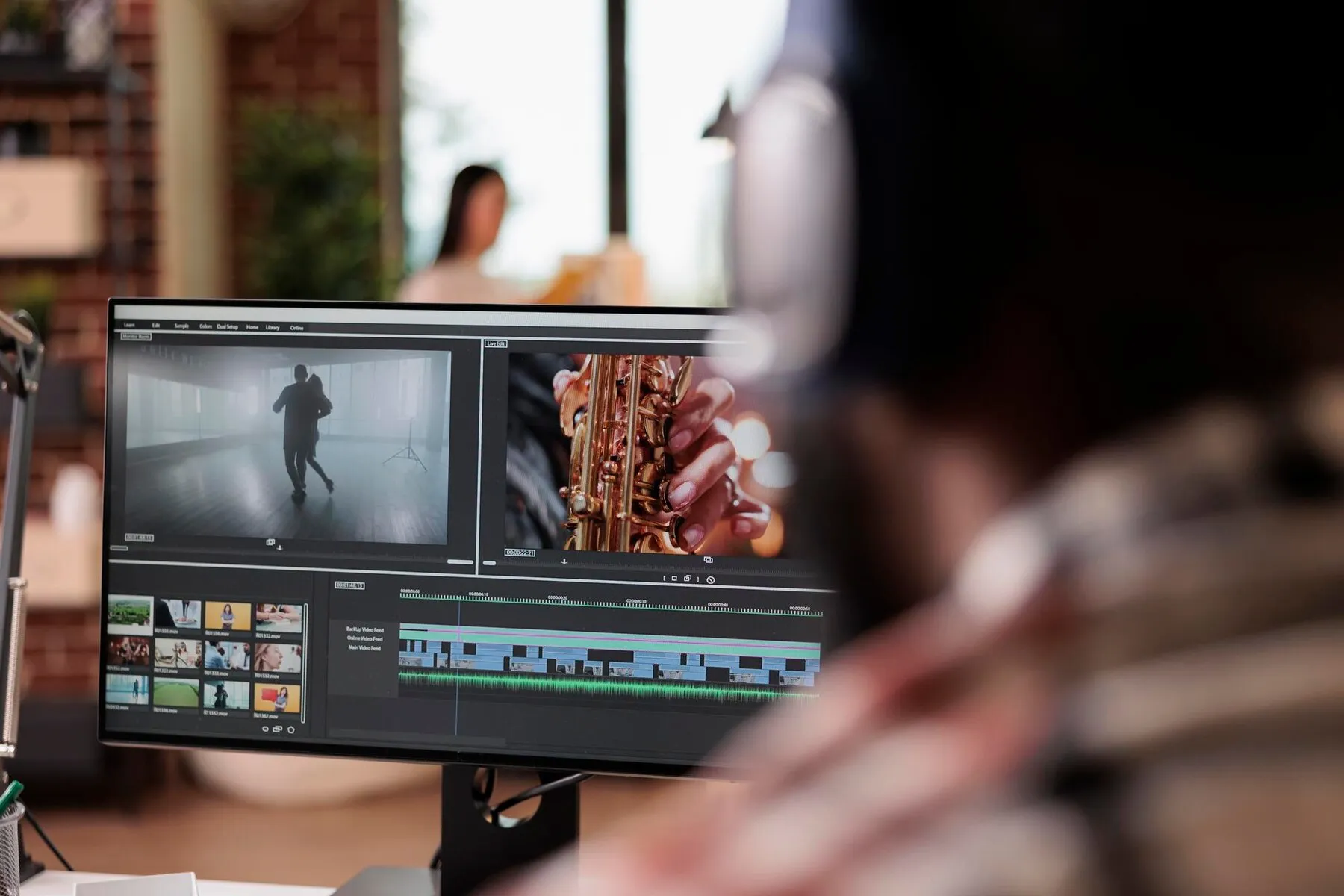
Our RaffertyWeiss virtual platform is a safe, reliable and effective way for your organization to successfully hold conferences, meetings and panel discussions in an online environment.
Our solutions are designed for associations, nonprofits, corporations, educational institutions and federal, state and local government agencies looking to bring their live or pre-recorded conferences or meetings into the virtual online realm, while maintaining the highest possible quality and reliability.
Whether your attendees can’t be there in person for your live event, or if you prefer to host your event 100% virtually, we have the tools and experienced team ready to make your virtual conference or event happen easily and seamlessly.