Why Is Video Production Important for Healthcare Communication?
Building Patient Trust and Improving Outcomes Through Visual Media

Quick Summary / Key Takeaways
- Video turns complex clinical information into something patients actually understand and remember. That matters in every care setting.
- Patients trust organizations that communicate clearly. Video builds that trust faster than any brochure or intake packet.
- Training videos standardize procedures across clinical and administrative teams. That consistency reduces error and protects patients.
- Pre-procedure video preparation reduces patient anxiety, improves compliance, and cuts the time staff spend repeating the same explanations.
- Healthcare organizations that communicate well on video don't just serve patients better. They recruit better and build stronger community credibility.
Introduction

Think about a patient preparing for a knee replacement. She's read the printed materials. She still doesn't know what to expect in the OR, how long recovery takes, or what the physical therapy looks like. That uncertainty is avoidable. A well-produced video closes that gap. We've seen it work directly with healthcare associations, hospital systems, and federally funded health programs that we've served over more than 25 years.
Healthcare video production isn't about camera gear or editing software. It's about clear communication at the moments when clarity matters most. Patients dealing with diagnoses and procedures are often overwhelmed. Video helps them absorb what they need to know without relying on information they've already partially forgotten from a clinical conversation.
The applications go well beyond patient education. Training modules standardize procedures for new staff. Internal communication videos align departments across facilities. Recruitment videos attract candidates who genuinely fit the organization's mission. Public-facing content builds community trust before a potential patient ever walks through the door.
Healthcare organizations we work with use video across all of these functions. The common thread is this: video communicates consistently, at scale, without variation. That's exactly what clinical environments need.
Healthcare Video Types and Their Communication Impact
| Video Category | Primary Goal | Patient Benefit | Success Metric |
|---|---|---|---|
| Patient Education | Informed consent and clear procedure understanding | Better retention, fewer follow-up questions, more confident decision-making | Completion rate and comprehension feedback |
| Staff Training | Care consistency and standardized communication across teams | Improved patient safety and clearer procedural alignment | Error reduction and training completion outcomes |
| Brand Storytelling | Trust building and community connection | Greater familiarity and comfort with the organization | Audience engagement and inquiry trends |
| Testimonials | Peer validation through real patient experiences | Reduced anxiety and stronger confidence in care decisions | Patient satisfaction scores and qualitative feedback |
Healthcare Video Production: Cost Considerations and Long-Term Value
| Content Type | Production Level | Resource Need | Long-term Value |
|---|---|---|---|
| Procedure Overviews | Professional studio production | Clinical expertise and structured messaging | Fewer miscommunications, better-prepared patients, reduced liability exposure |
| FAQ Series | In-house or hybrid production | Subject-matter experts on camera | Fewer inbound inquiries, clearer patient guidance at lower cost |
| Recruitment | Cinematic or high-quality storytelling | Internal communications and HR collaboration | Stronger candidate alignment and long-term retention support |
| Telehealth Guides | Simple animation or guided visual formats | Design and accessibility support | Expanded access to care information and consistent communication across platforms |
Healthcare Video Production Pre-Production Checklist
- Define the specific patient audience before scripting. Tone, language, and pacing all follow from who's watching.
- Confirm all clinical information with qualified medical professionals before a single word of script is final.
- Verify that filming environments comply with privacy requirements and secure written consent from everyone on screen.
- Write a script that leads with empathy and uses plain language. If a patient wouldn't understand it, rewrite it.
Healthcare Video Production Review and Distribution Checklist
- Review completion and engagement data to find where viewers drop off. That's where the content needs work.
- Distribute across the right channels: patient portals, on-site displays, and approved digital platforms. Match the channel to the audience.
- Collect feedback from clinical and administrative staff. They'll tell you what's landing and what's confusing patients.
- Update content when medical guidance, policies, or procedures change. An outdated video is worse than none.
Table of Contents
Section 1: THE PATIENT EXPERIENCE
Section 2: OPERATIONAL EFFICIENCY
Section 3: STRATEGY AND COMPLIANCE
Frequently Asked Questions
Section 1: THE PATIENT EXPERIENCE
FAQ 1: How does video improve patient education and health literacy in healthcare communication?
Video improves health literacy by translating clinical language into something patients can actually follow and retain. Written discharge instructions get lost or ignored. Video doesn't. We've produced patient education content for healthcare associations and hospital-affiliated organizations, and the difference in comprehension outcomes is measurable.
Combining narration with visual demonstration closes the gap between what a clinician says and what a patient takes home. Patients dealing with new diagnoses or upcoming procedures don't have time to decode dense text. Video gives them the information in a format they can pause, replay, and review on their own schedule.
Clear video communication also reduces the burden on clinical staff. When patients arrive already informed, appointments run more efficiently. Care teams spend their time on clinical judgment, not basic explanation.

FAQ 2: Why is visual storytelling more effective than written medical materials in healthcare communication?
Written materials work best for patients who are calm, literate, and reading in good light. That's not the context most healthcare materials land in. Patients are anxious. They're in unfamiliar environments. They're trying to process a lot of information at once. Video meets them where they are.
Visual storytelling uses real voices, real environments, and real sequences of events to explain what's coming. A patient watching a pre-procedure video at home doesn't just read that they'll be transferred to a recovery room. They see what the room looks like, hear what the nurse will say, and understand what they're supposed to do. That preparation reduces fear and improves compliance.
Video also accommodates a wider range of literacy levels and learning preferences. It engages both auditory and visual processing, which means more of the information actually sticks. When we develop healthcare content, we write scripts for the ear, not the page. That's a fundamental difference in approach.
FAQ 3: Can video content help reduce patient anxiety before surgical or diagnostic procedures?
Yes, and this is one of the highest-value applications of healthcare video we produce. Patients who know what to expect before a procedure are less anxious, more cooperative, and more likely to follow post-care instructions accurately. That's not anecdotal. It's a consistent pattern we've seen in the pre-procedure content we've developed for clinical and health association clients.
Video achieves this by making the unfamiliar familiar. Showing the OR preparation process, introducing the care team, and walking through the recovery sequence transforms an abstract experience into a predictable one. When patients have already 'seen' what's coming, the actual event feels less threatening.
Direct-to-camera footage from care providers is particularly effective here. A patient who has already heard the surgeon explain the procedure on video arrives at the appointment with a different baseline of trust. That matters clinically, and it matters operationally.
Section 2: OPERATIONAL EFFICIENCY
FAQ 4: How does healthcare video production support time efficiency for clinical staff?
The most common answer we hear from healthcare clients: staff stop repeating themselves. When foundational information is on video, nurses and physicians don't spend the first ten minutes of every patient interaction covering the same ground. That time gets reallocated to clinical care.
This isn't just about convenience. In high-volume care environments, communication efficiency directly affects patient throughput and staff workload. A well-produced discharge video covers medication instructions, activity restrictions, and follow-up scheduling in a consistent format that patients can review after they get home. That reduces callbacks and readmission risk.
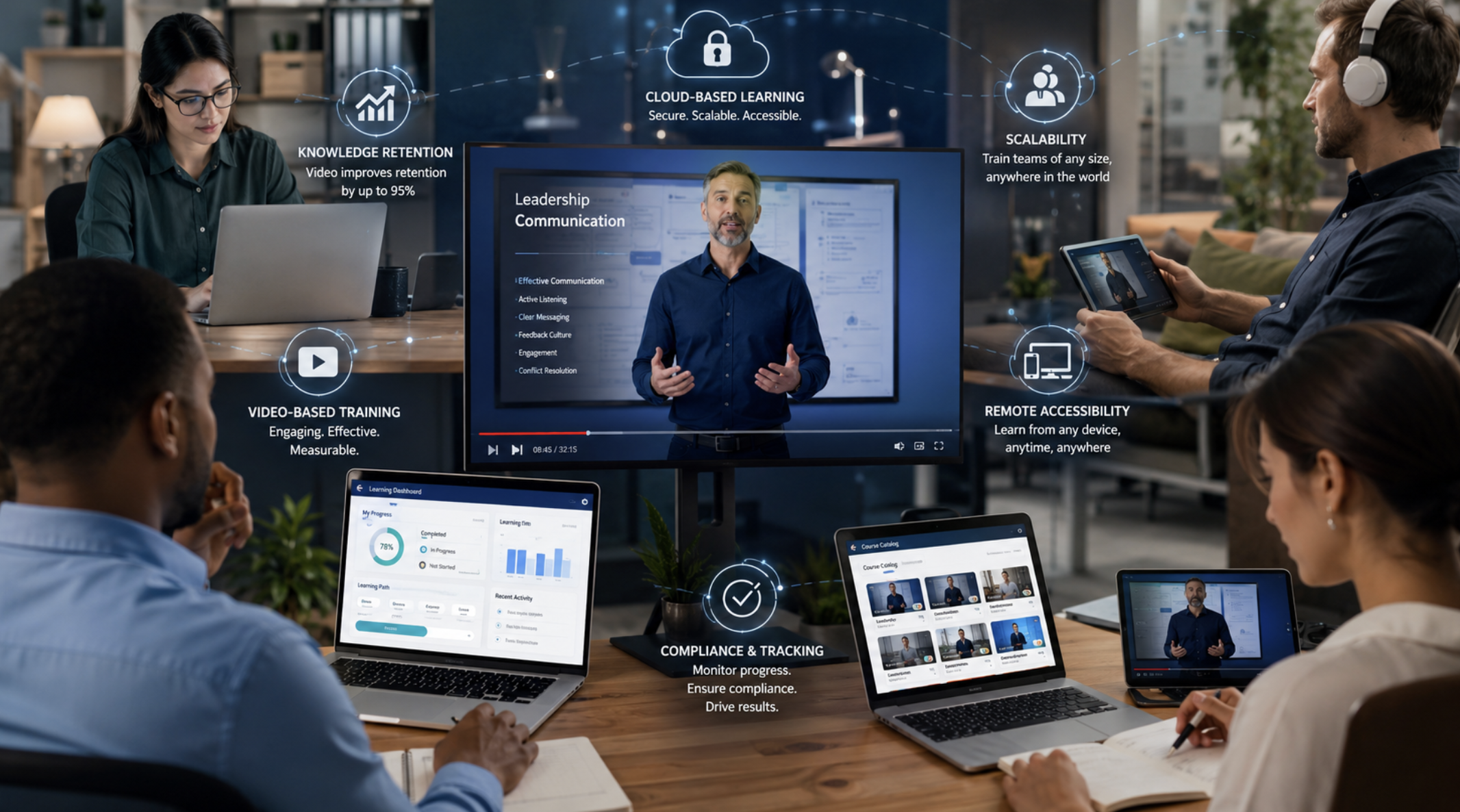
The same principle applies internally. When onboarding protocols and safety procedures live in structured training videos, new staff get consistent instruction regardless of who's on shift. There's no version drift. There's no gap between what one supervisor teaches and what another does.
FAQ 5: How does video improve consistency in internal medical training and communication?
Live training varies. It depends on the instructor, the day, the group size, and how much time is available. Video doesn't vary. Every staff member in every location sees the same content, delivered the same way, with the same emphasis on safety-critical steps.
We've produced training content for organizations operating across multiple sites where procedural consistency is a direct patient safety issue. The challenge in those environments isn't knowledge. It's reliable transfer of knowledge across a distributed workforce. Video solves that.
On-demand access is the other factor. Staff can revisit a protocol before a complex procedure without pulling a supervisor off the floor. Refresher training becomes a self-service resource. Onboarding moves faster because new employees aren't waiting for scheduled sessions.
FAQ 6: How does healthcare video production support hospital recruitment and workforce communication?
Healthcare recruitment is competitive, and text-based job postings don't differentiate organizations. Video does. Candidates who watch a well-produced recruitment video before applying arrive with a clearer picture of the culture, the team, and the work environment. That pre-screening reduces mismatched hires.
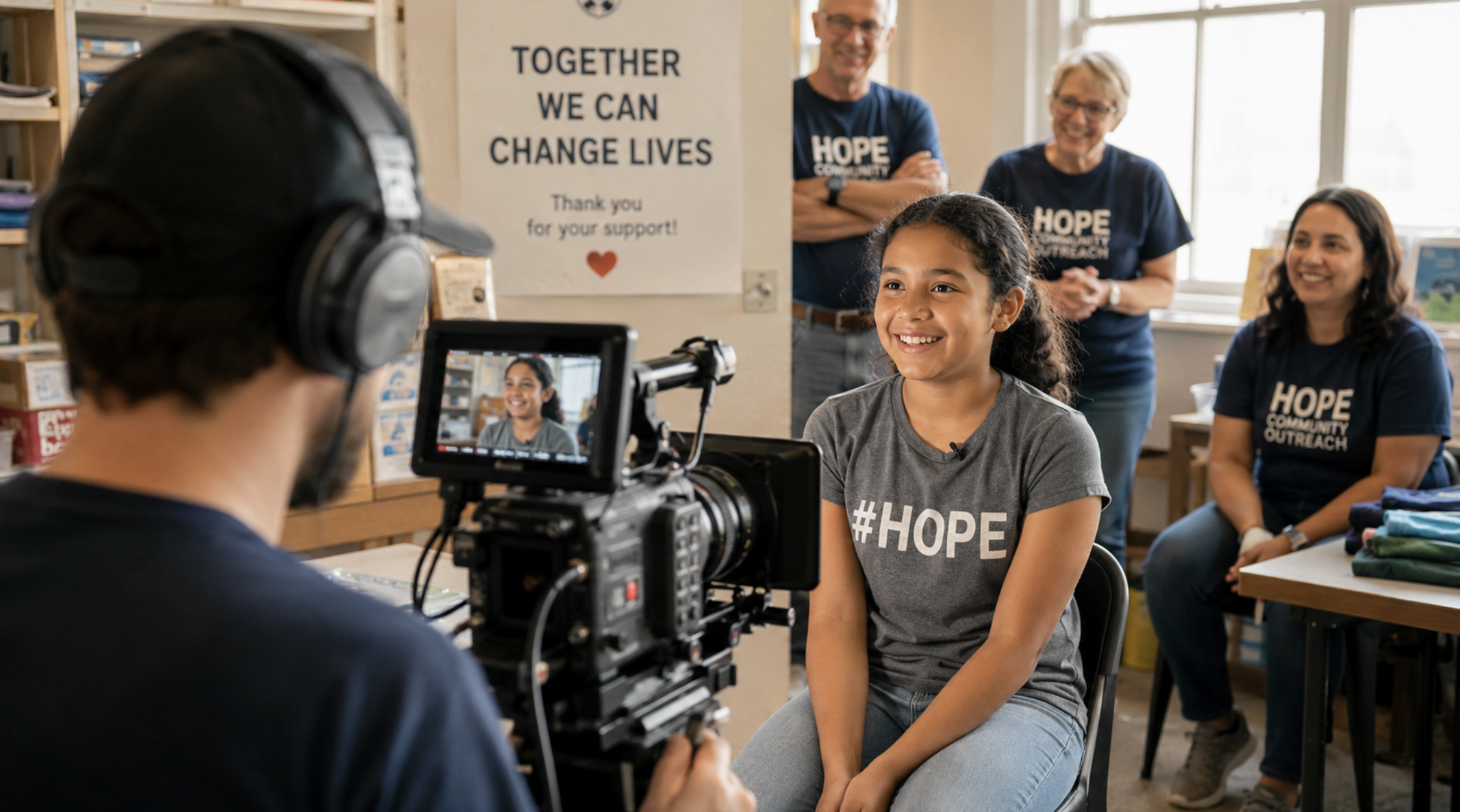
The most effective recruitment videos we produce for healthcare clients feature current staff speaking directly about their experience. Not marketing language. Real perspectives on day-to-day work, team dynamics, and the organization's mission. Prospective candidates trust peer voices more than institutional messaging.
These videos also communicate what written materials can't: the physical environment, the pace of the work, the culture of the unit. A candidate who has already seen the ICU, met the nursing director on video, and heard about the professional development program is a much more qualified applicant than one responding to a job listing.
Section 3: STRATEGY AND COMPLIANCE
FAQ 7: What legal and compliance considerations should guide healthcare video production?
Privacy and consent are the foundation of every healthcare production we run. Before any camera rolls, we confirm that filming environments are HIPAA-compliant, that no identifiable patient information is visible in the background, and that documented consent is in place for every individual on screen.
Script review is equally important. Clinical claims require sign-off from qualified medical professionals. We don't finalize healthcare scripts without that review loop, and we recommend the same practice for any in-house production. An inaccurate video creates liability and erodes the trust you're trying to build.
On the production contract side, clear agreements should define ownership of source files, usage rights, and revision responsibilities. Organizations should retain their raw footage and project files. Those assets have long-term value, especially as content gets updated to reflect changing medical guidance.
FAQ 8: How can healthcare organizations evaluate the impact and return of video content?
Start by defining what success looks like before the video is produced, not after. We ask every healthcare client this question at the start of an engagement: what changes if this video works? The answer shapes how you measure it.
For patient education content, the right metrics are concrete: fewer callback questions, reduced readmission rates where appropriate, higher scores on patient satisfaction surveys that specifically address understanding. Completion rate and rewatch rate tell you whether the content is actually being used.
For staff training, look at error rates, protocol adherence, and onboarding time. For recruitment videos, track application volume, offer acceptance rates, and early retention for new hires. For public-facing brand content, appointment inquiries and community engagement trends tell the story.
The organizations that get the most value from their video investment are the ones that close the loop. They review the data, update the content when it underperforms, and build on what works.
.webp)