Unlocking Visual Storytelling: Your Guide to Video Production Companies
Navigate the World of Professional Video Creation and Maximize Your Impact
Choosing a video production company is about finding a storytelling partner, not just a crew with cameras. The right team helps you clarify your message, shape a narrative, and execute production so the final video aligns with your brand and goals. This article explains how visual storytelling works and how to evaluate potential partners.
Quick Summary / Key Takeaways
- A professional video production partner has the experience, creativity, and skills to guide your project from start to finish. This ensures that every part, from story development to final delivery, matches your organization’s message and goals.
- Partnering with an established production company saves time and resources. A coordinated team handles creative, technical, and logistical details, allowing your staff to focus on core tasks while achieving top-quality results.
- Production budgets depend on scope, length, complexity, and creative development. A clear plan helps align spending with purpose, ensuring your video meets communication goals while staying efficient and high-quality.
- Choosing the right partner involves more than just technical skill. Review portfolios and testimonials, and consider their understanding of your brand and audience. Strong production relationships are built on shared vision and trust.
- A full-service production company does more than film — it helps your message reach further. From advising on distribution to assessing performance and repurposing content, an experienced team ensures each video continues to inform, inspire, and create impact over time.
Introduction
Today, video is one of the best ways for organizations to share their messages clearly and impactfully. Whether it's telling a brand story, training staff, or engaging a community, a well-made video can express ideas that words alone cannot. However, crafting a video that feels genuine, focused, and polished takes more than just a camera and a good idea.
A professional video production company adds structure, experience, and creativity at every step. They handle planning, scripting, filming, and final delivery. By blending storytelling skills with technical know-how, they ensure your message reaches the right audience. This process is collaborative, based on understanding your goals and turning them into visual communication that informs, inspires, and lasts.
This guide will help you grasp the role of a professional video production company—what they do, why they are important, and how to choose one that fits your organization’s vision and communication needs.
Cost & Value Comparison: Video Production Options
Common Video Types & Production Company Benefits
Application Preparation Checklist
- Define clear objectives and know your target audience. This lays the groundwork for all your creative and technical choices.
- Set a realistic budget and timeline that match your project’s scope and purpose.
- Draft a concise creative brief that outlines your vision, core message, and tone. This keeps everyone aligned from start to finish.
- Carefully review production partners. Look at portfolios, case studies, and references to find a team that shares your mission and goals.
Post-Arrival Checklist
- Share your video across relevant channels, your website, social media, and internal platforms, to reach different audiences.
- Track key engagement metrics like watch time, shares, and viewer feedback to measure response.
- Gather insights from your team and audience to see what resonated most.
- Find chances to repurpose content. Create shorter clips, highlights, or follow-ups to keep the momentum going.
Table of Contents
Section 1: Understanding Video Production Companies
- What does a video production company do?
- Why should I hire a professional video production company instead of doing it myself?
- What are the different types of video production companies?
- How do video production companies create a unique brand story for clients?
Section 2: The Video Production Process & What to Expect
- What are the main stages of video production?
- How long does a typical video production project take?
- What is a 'creative brief' and why is it important?
- How involved will my team need to be during the production process?
- What kind of equipment and technology do professional video production companies use?
- Can a video production company help with video distribution and promotion?
Section 3: Choosing the Right Partner & Maximizing ROI
- How do I choose the right video production company for my project?
- What key questions should I ask a potential video production company?
- What is the average cost of hiring a video production company?
- How can I ensure my video project delivers a strong return on investment (ROI)?
- What red flags should I look out for when selecting a production company?
Frequently Asked Questions
Section 1: Understanding Video Production Companies
FAQ 1: What does a video production company do?
A video production company handles every step of bringing a message to life. They start with concept development and scriptwriting, then move to filming, editing, and final delivery. A strong production partner helps you with planning, scheduling, and logistics. This ensures your story is clear, efficient, and purposeful. In post-production, they polish visuals, sound, and graphics to create a refined final piece that supports your organization’s goals. Whether it’s a training video, public awareness message, or corporate story, they turn your ideas into visual communication that informs, engages, and inspires your audience.
Real Results: A marketing agency partnered with a production company for a client's product launch video, resulting in 300,000 views and a 15% increase in lead generation within the first month. The company managed all aspects, allowing the agency to focus on strategy.
A production company turns your ideas into professional video content. You get high-impact results without handling every detail.
FAQ 2: Why should I hire a professional video production company instead of doing it myself?
Partnering with a professional production company offers more than just advanced equipment. It brings experience, perspective, and a clear process that makes your message stand out. A skilled team oversees every production stage — from planning and storytelling to filming, editing, and delivery. They focus on precision and purpose. This expertise boosts visual and audio quality, saves time, lowers risk, and aligns projects with your goals. Most importantly, professional production transforms information into a story. It creates content that feels genuine, connects with your audience, and showcases your organization’s credibility and care.
Real Results: A startup initially tried producing an explainer video in-house, but the low quality deterred potential investors. After investing in a production company, they secured a $1M funding round, with investors citing the professional video as a key factor in their decision.
Professional companies provide top quality, save time, and use their expertise. This is key for your brand's reputation and reaching your business goals.
FAQ 3: What are the different types of video production companies?
Video production companies vary in focus and expertise based on your project needs. Full-service partners handle everything from concept to distribution. They provide a smooth process for organizations needing complete support. Specialized studios focus on formats like animation, commercials, or event coverage, offering deep knowledge in those areas. Some firms also emphasize documentary or brand storytelling, mixing creativity with strong narratives. The right choice depends on your goals, timeline, and resources—whether you want full project management or specific support for a particular need.
Real Results: A non-profit needed a series of animated explainer videos for their campaign and found a specialized animation studio that boosted their message clarity by 40% compared to previous live-action attempts. This specific focus directly matched their content needs.
Takeaway: Identify your video's main need, like animation, commercial, or event. This helps you find the right production company.
FAQ 4: How do video production companies create a unique brand story for clients?
Creating a strong brand story starts with understanding. A skilled production partner learns about your mission, values, and audience. They uncover what makes your message unique. From this insight, they craft a clear narrative that reflects your purpose and connects with viewers. Through thoughtful scripting, visual planning, and tone development, every choice—like imagery, pacing, and sound—works to communicate authenticity and build trust. The result is a story that represents your organization and resonates with your target audience.
Real Results: A local coffee shop struggled with brand identity until a production company created a documentary-style video featuring its founders' passion and community involvement, leading to a 25% increase in local foot traffic and customer loyalty.
Takeaway: Top production companies don’t just shoot videos. They create stories that connect emotionally and truly represent your brand.
FAQ 5: What should I look for in a video production company?
Look for relevant sector experience, a portfolio that matches your desired style, a clear process, and strong communication. Client testimonials and long-term relationships are also valuable signals.
↑ Back to Table of Contents
Section 2: The Video Production Process & What to Expect
FAQ 6: What are the main stages of video production?
The video production process has three main stages: pre-production, production, and post-production. Pre-production sets the stage. It defines goals, sharpens the message, and plans details like scripts and schedules. This stage makes sure everyone shares a clear vision before filming starts. Production is where the story comes alive. Visuals, sound, and performances are captured on set or location with care and creativity. Post-production ties everything together. It involves editing, color work, graphics, and sound, turning raw footage into an engaging final product. Each stage builds on the last, ensuring the final video communicates clearly, purposefully, and professionally.
Real Results: A marketing team following these stages with a production partner delivered a campaign video 1 week ahead of schedule, attributing the success to thorough pre-production planning that prevented costly on-set delays and rework in post-production.
Know the three stages: pre-production, production, and post-production. This helps you manage expectations and play a key role in your project.
FAQ 7: How long does a typical video production project take?
Timelines for video production depend on the project's goals, complexity, and scope. A short educational or promotional video may take weeks from concept to finish. In contrast, larger projects, like brand stories, documentaries, or multi-part series, can take months. Each stage, from planning and scripting to filming and post-production, needs time for clarity, accuracy, and quality. Factors like review cycles, scheduling, and logistics also affect timing. The key step is to set realistic expectations early and keep communication open. A thoughtful, collaborative approach leads to better results.
Real Results: A complex product demo video involving CGI and multiple locations took 12 weeks, adhering to the production company's initial estimate thanks to their structured project management and the client's prompt feedback, leading to a successful launch.
Takeaway: Project length varies by scope. So, talk openly with your production company about timelines. Also, give prompt feedback to stay on track.
FAQ 8: What is a 'creative brief' and why is it important?
A creative brief is key to a successful video project. It defines the purpose, audience, key messages, and tone. This brief acts as a roadmap for your organization and the production team. By outlining goals and expectations from the start, it ensures that every creative and technical choice aligns with the same vision. It also helps check progress and the final result. A strong brief keeps the project focused and efficient. This alignment supports your organization’s communication goals and turns ideas into meaningful storytelling.
Real Results: An agency spent an extra $10,000 on revisions due to an unclear brief. Subsequent projects with a detailed brief saw 90% fewer revisions and were completed 20% faster, proving the brief's value in cost and time savings.
Takeaway: Spend time on a clear creative brief. It’s the key guide that keeps your video project efficient, on-message, and successful.
FAQ 9: How involved will my team need to be during the production process?
Your team's involvement depends on the project's scope. Partnering with a good video production company makes the process clear and efficient. Your team plays a key role during pre-production. This includes giving input for the creative brief, reviewing scripts, and approving storyboards to ensure the project aligns with your goals.
During filming, the production team manages logistics while keeping you updated on key moments. In post-production, your feedback helps shape the final edit. The goal is partnership. You get creative input and control where it matters most, without adding daily production tasks to your schedule.
Real Results: A tech company delegated filming entirely to their production partner, providing feedback only during pre-production and post-production. This allowed their internal marketing team to focus on launch strategy, resulting in a seamless product rollout.
Get ready to be active in early planning and final reviews. Trust your production partner to handle execution and on-set details.
FAQ 10: What kind of equipment and technology do professional video production companies use?
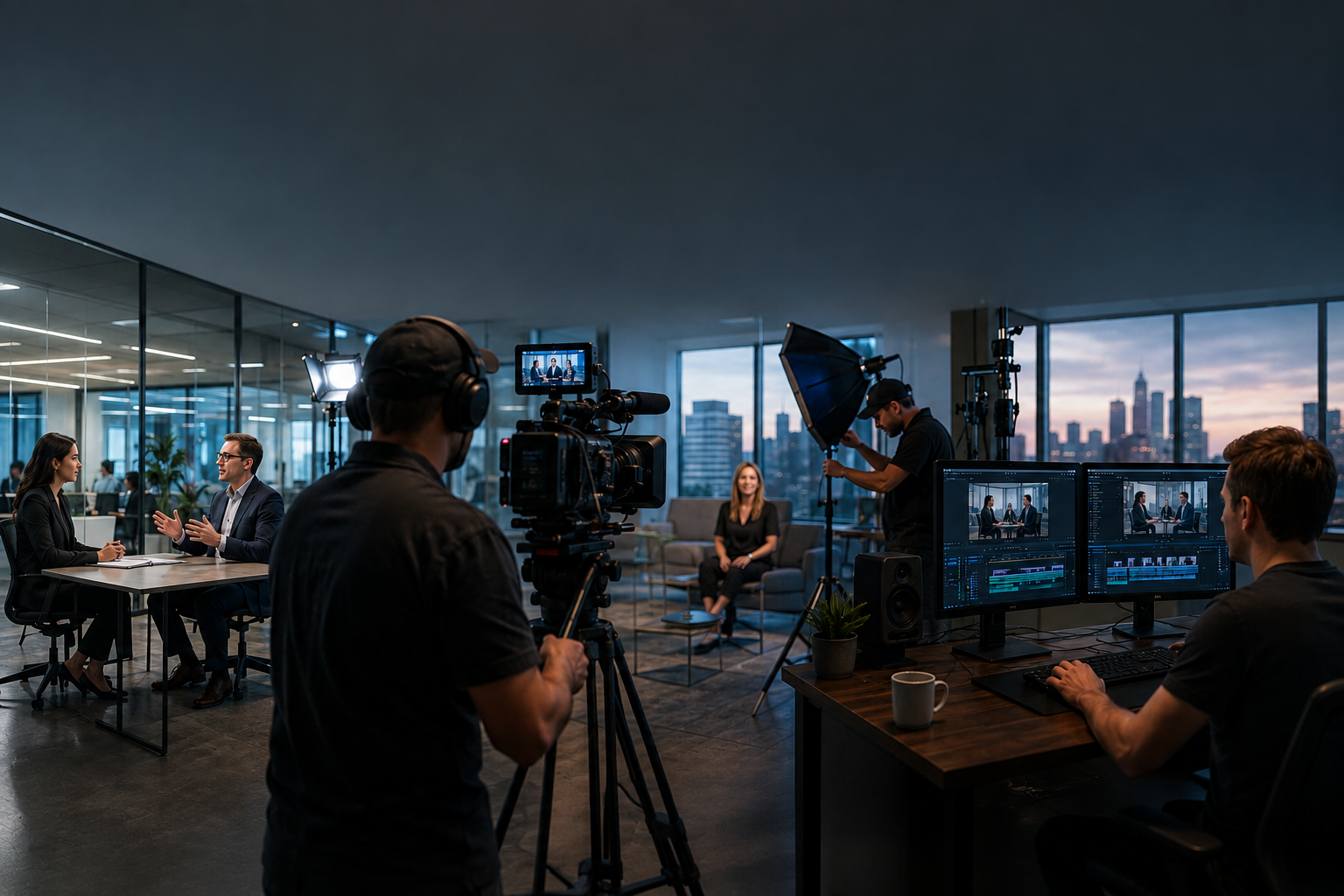
Professional production companies use various advanced tools and technology to create clear and engaging results. This includes high-resolution cameras, professional lighting, and precise audio equipment. These elements ensure every scene looks and sounds great. During filming, tools like gimbals, drones, and teleprompters help maintain quality and capture dynamic angles. In post-production, industry-standard software like Adobe Premiere Pro, After Effects, and DaVinci Resolve ensures accuracy and visual clarity. While equipment is crucial, the real difference comes from the experience behind it. Knowing how to use these tools effectively makes a professional production partner stand out.
Real Results: A local tourism board saw a 50% increase in website engagement after their video, shot by a company using high-end drone footage and cinematic cameras, captured breathtaking aerial views that amateur equipment simply couldn't achieve.
Takeaway: Top companies use the best equipment and software for amazing audio and visual quality. This boosts your brand.
FAQ 11: Can a video production company help with video distribution and promotion?
Yes. A production company creates high-quality, purposeful content. A full-service partner helps you get that content seen by the right audience. This includes advice on platform selection, like your website, social media, or YouTube. They also help tailor formats and messages for each channel. Experienced teams often work with clients or marketing partners to align videos with broader communication strategies. This ensures consistency and measurable results. In short, a professional production company doesn’t just deliver a video. It helps you share your message effectively, so your story continues to work for your organization long after launch.
Real R1sults: A production company not only created a stellar commercial but also advised on its YouTube SEO, resulting in the video ranking in the top 3 for relevant keywords and garnering 50,000 organic views in its first month.
Ask about distribution and promotion services. Many production companies provide tips to help your video reach its audience.
↑ Back to Table of Contents
FAQ 12: How does visual storytelling improve my videos?
Storytelling gives structure and emotion to your message, making it more memorable and persuasive. It helps audiences understand not just what you do, but why it matters.
Section 3: Choosing the Right Partner & Maximizing ROI
FAQ 13: How do I choose the right video production company for my project?
Choosing the right video production company starts with a team that understands your message, audience, and goals. Check their portfolio to see how they tell stories. Look at both the visuals and how effectively they communicate. Experience in your industry or similar projects helps them foresee challenges and meet your standards. Good communication, clear timelines, and openness are key — strong production relationships rely on trust and teamwork. A solid partner will listen, ask the right questions, and guide you through each production stage clearly. In the end, the right fit feels like an extension of your team, dedicated to telling your story with the same care you would.
Real Results: A food brand chose a production company with extensive culinary video experience, resulting in a campaign that generated 20% higher engagement rates than previous efforts, demonstrating the power of specialized industry fit.
Takeaway: Focus on aligning your portfolio, communicating clearly, and showcasing relevant experience. This way, you can find a partner who truly gets your vision.
FAQ 14: What key questions should I ask a potential video production company?
When vetting a video production company, ask about their process. Find out how they plan, tell stories, and collaborate from concept to delivery. Request examples of work similar to your project. Learn how they helped clients meet specific communication goals.
It's also key to understand their project timelines. Know what’s included in their pricing and how they handle feedback and revisions. Inquire about their core team and capabilities. Ask how they measure success after a project wraps up.
Finally, check how they keep your message clear and consistent throughout production. These questions reveal more than just experience. They show if the company listens, communicates openly, and shares your commitment to telling the right story.
Real Results: A client avoided a costly misstep by asking about revision policies upfront, discovering one company charged per revision, while another included two rounds in their standard package, saving them thousands.
Ask specific questions about the process, experience, and pricing. This ensures transparency and avoids surprises later.
FAQ 15: What is the average cost of hiring a video production company?
The cost of hiring a professional video production company can vary widely. It depends on the project's scope, complexity, and goals. For smaller productions, like a 1–2 minute corporate video, costs usually range from $5,000 to $15,000. This range depends on creative needs and production logistics. More complex projects, such as broadcast commercials or multi-video campaigns, can cost over $50,000. Factors like animation, specialized talent, and multiple shoot days drive these costs. Costs also depend on video length, production complexity, location, and the experience of the creative and technical teams. A detailed proposal and cost breakdown will show you where your investment goes, from planning to post-production. This ensures it aligns with your budget and goals. While costs vary, a well-produced video can provide lasting value that exceeds the initial investment.
Real Results: A small business invested $10,000 in a professionally produced brand video, which led to a 10% conversion rate increase on their landing page, demonstrating a clear positive ROI despite the initial cost.
Takeaway: Costs can vary a lot. So, get a detailed quote. Focus on the potential ROI, not just the upfront price. This helps justify your investment.
FAQ 16: How can I ensure my video project delivers a strong return on investment (ROI)?
To ensure a strong return on investment for your video project, start with a clear purpose. Define measurable goals from the beginning. These can include increasing awareness, improving engagement, or driving inquiries and conversions. Collaborate closely with your production partner to create a story that links your objectives to your audience's needs. This ensures every creative choice leads to a real outcome.
Plan for distribution early. Optimize your video for web, social media, internal channels, or broadcast. This will help it reach the right people in the right context. After launch, track key performance indicators like views, completion rates, and conversions. Then refine your strategy based on the data you gather.
When built on strategy and alignment, video becomes more than just a deliverable. It becomes a valuable communication asset that continues to inform, inspire, and deliver value over time.
Real Results: A B2B company saw a 3x ROI on their investment in a professional testimonial video, directly attributing 50 new qualified leads to its strategic placement on their sales pages and targeted outreach campaigns.
Set clear goals, plan your distribution, and closely track performance. This way, your video investment leads to real business success.
FAQ 17: What red flags should I look out for when selecting a production company?
Choosing the right production partner involves alignment and trust, not just ability. Be wary of proposals that seem unclear or too cheap. Professional production needs realistic budgets for lasting quality. A lack of transparency in process, pricing, or timelines may indicate future problems. Review portfolios closely; a seasoned company will show consistent work that highlights creativity and reliability. Notice how the team communicates early on. Responsiveness, clarity, and professionalism are good signs of how they’ll handle your project. Lastly, steer clear of anyone promising instant results or "viral" success without a solid strategy. The best partners are honest, collaborative, and focused on helping you reach your goals with precision and integrity.
Real Results: A small business nearly hired a cheap firm that later demanded hidden fees and delivered a subpar product. They switched to a more reputable company for a slightly higher cost, saving themselves from potential brand damage and legal disputes.
Takeaway: Stay away from companies with unclear pricing, vague portfolios, or poor communication. These signs can lead to future issues and dissatisfaction.
↑ Back to Table of Contents
FAQ 18: What questions should I ask before hiring a video partner?
Ask about process, timelines, budget ranges, rights/usage, and how they measure success. Request project examples similar to your scope and sector.
↑ Back to Table of Contents
FAQ 19: When should I involve the production company in planning?
The earlier the better; involving them during goals and concept development lets them design an efficient, realistic plan.
↑ Back to Table of Contents
Article Summary
Unlock success with a video production company. Learn to choose the best partner, understand the process, and maximize your video ROI. Get expert tips!
.webp)