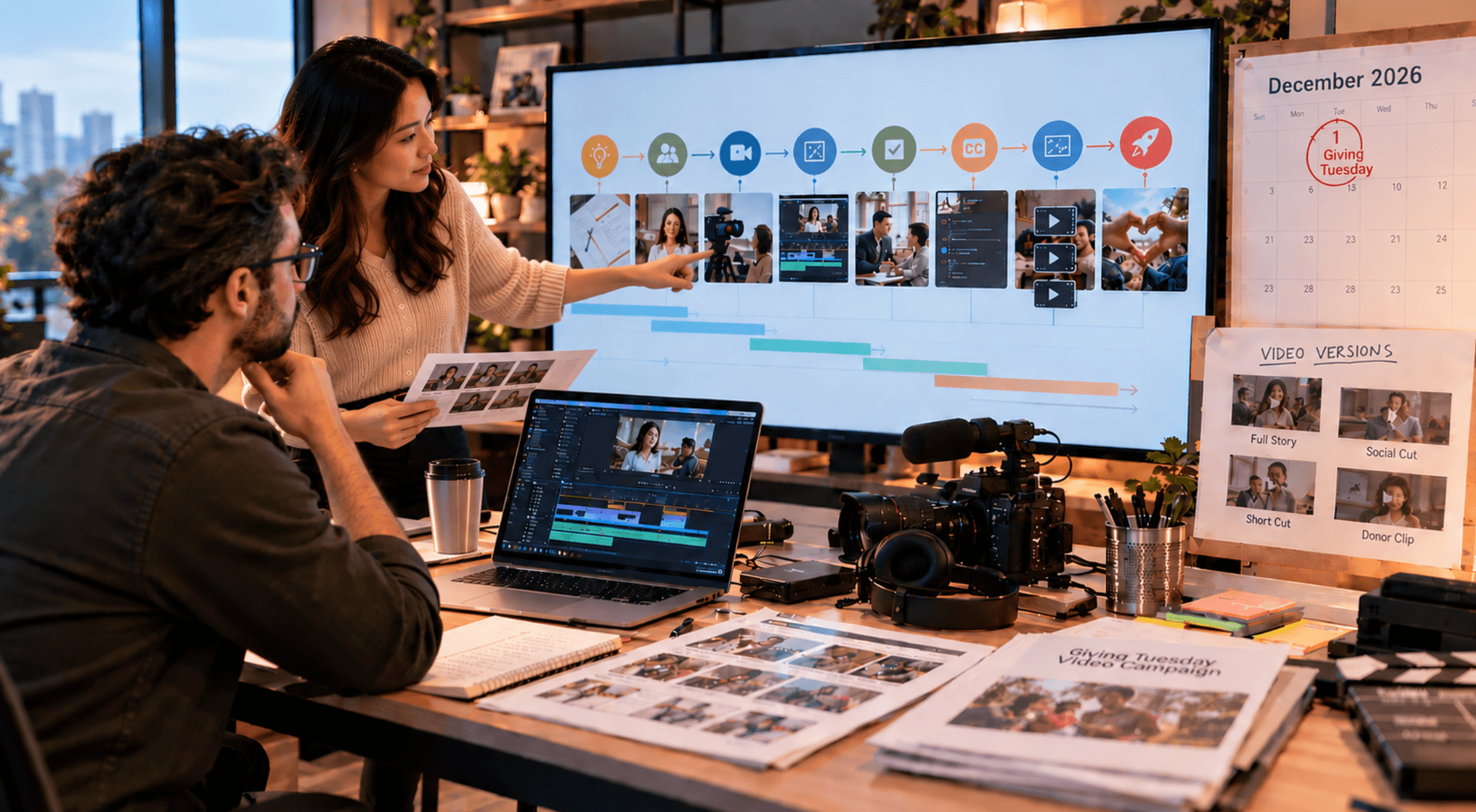
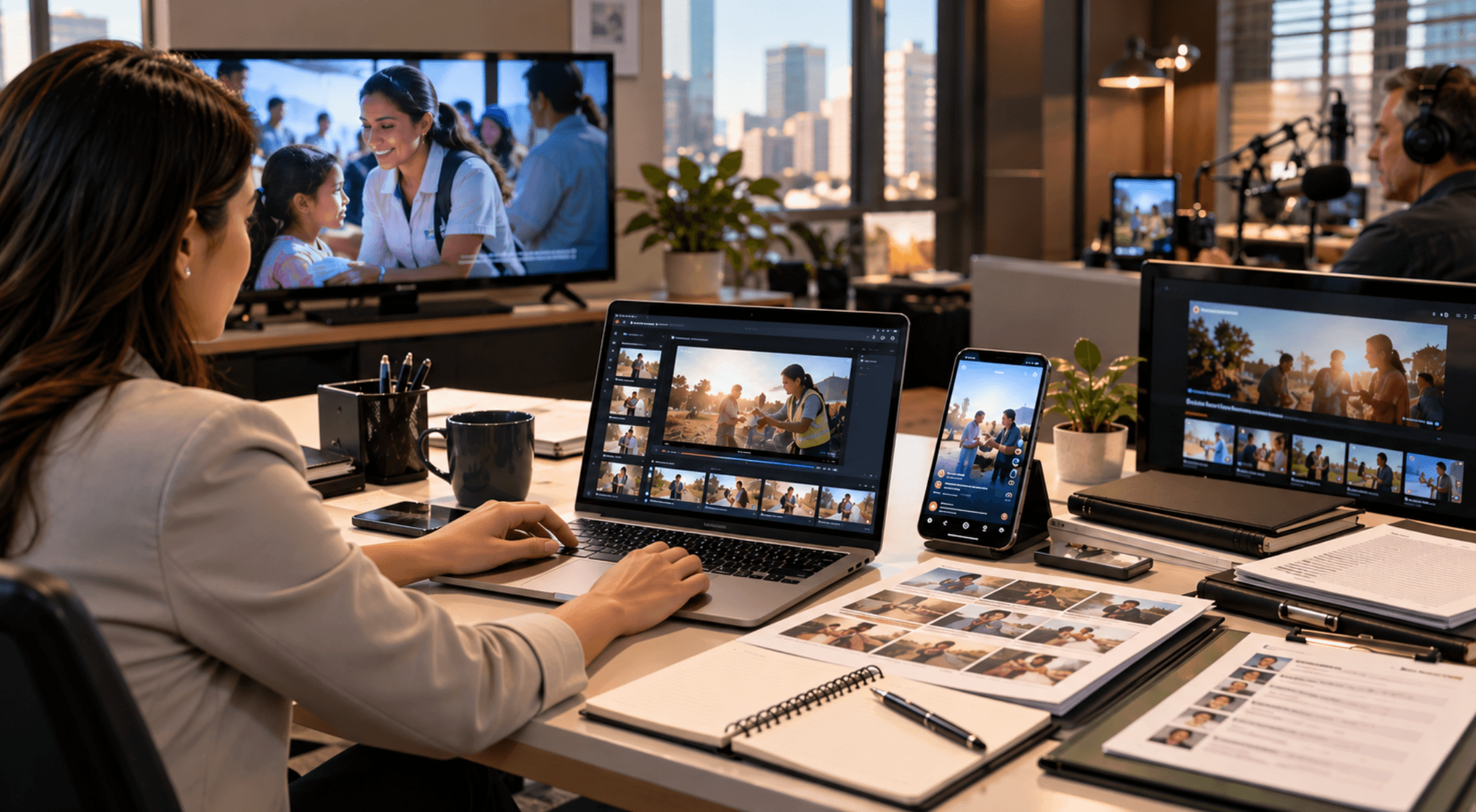
Mastering Government Video Production: Engaging Citizens & Driving Impact
Your Definitive Guide to Strategic Storytelling in the Public Sector

Quick Summary / Key Takeaways
- Government video isn't just PR; it's a vital tool for transparency, public education, and citizen engagement, demanding clarity and authenticity above all else.
- Navigating bureaucratic approvals and compliance (e.g., ADA, Section 508) is as critical as creative execution, requiring meticulous planning and early stakeholder involvement.
- Strategic distribution across diverse platforms—from agency websites to social media and public access channels—is key to reaching all target audiences effectively.
- Measuring success goes beyond view counts; focus on specific KPIs like policy understanding, citizen action, and feedback to demonstrate tangible impact.
- Embrace humanized storytelling; relatable narratives from public servants or citizens build trust and cut through the perceived formality of government communications.
Introduction
In an era where information overload is the norm and public trust is constantly scrutinized, government video production has transcended mere novelty to become an indispensable tool. It's how agencies connect, clarify, and compel action, transforming complex policies into digestible narratives. But it's not simply about pointing a camera; it's about strategic communication with unique challenges and profound responsibilities. From public safety announcements that save lives to educational series that demystify legislation, video bridges the gap between government and citizens. Yet, unlike commercial ventures, public sector video operates within a strict framework of compliance, accountability, and the inherent need to serve every segment of the population. This guide delves into the nuances of creating impactful government video. We'll explore how to craft compelling stories that resonate, navigate the intricate web of regulations, and leverage visual media to build transparency and foster genuine civic engagement. Let's move beyond dry presentations and into dynamic storytelling that truly serves the public.
Comparison: In-house vs. Outsourced Government Video Production
Key Government Video Production Types & Their Impact
Application Preparation Checklist
- Define clear objectives & target audience for the video project.
- Secure all necessary legal approvals, permits, and Section 508 compliance reviews.
- Develop a detailed production timeline, budget, and content script.
- Coordinate talent, locations, and equipment well in advance of shooting.
Post-Arrival Checklist
- Monitor distribution platforms for engagement metrics (views, shares, comments).
- Collect stakeholder feedback and conduct post-project debriefs.
- Analyze impact against initial objectives (e.g., policy understanding, citizen action).
- Archive project assets securely and document lessons learned for future productions.
Table of Contents
Section 1: The Strategic Imperative of Government Video
- Why is video essential for government communication today?
- How does video build trust and transparency in the public sector?
- What unique challenges does government video production face?
Section 2: Planning & Pre-Production for Public Sector Projects
- What are the critical first steps in planning a government video project?
- How do you define the target audience and objectives for government videos?
- What legal and compliance considerations are paramount?
- How should a budget be allocated for a government video production?
Section 3: Production, Storytelling & Accessibility
- What are effective storytelling techniques for government topics?
- How can agencies ensure their videos are accessible to all citizens (e.g., ADA, Section 508)?
- What's the role of internal teams versus external vendors in production?
- How can authentic voices be incorporated into government videos?
Section 4: Distribution, Measurement & Future Trends
- What are the most effective distribution channels for government videos?
- How can the impact and ROI of government video initiatives be measured?
- What emerging technologies are shaping the future of government video?
- How can continuous improvement be integrated into an agency's video strategy?
Frequently Asked Questions
Section 1: The Strategic Imperative of Government Video
FAQ 1: Why is video essential for government communication today?
Video is essential for government communication today because it humanizes complex information, reaching diverse audiences more effectively than text-based formats. It fosters greater public understanding of policies, services, and initiatives, transcending literacy barriers and capturing attention in a visually-driven world. Furthermore, video allows government agencies to convey empathy, build trust, and demonstrate transparency in an authentic and engaging manner. This medium also facilitates rapid dissemination of critical updates, like emergency broadcasts or public health advisories, ensuring timely and widespread citizen awareness.
Real Results: A state public health agency saw a 45% increase in vaccine registration after launching a series of animated explainer videos simplifying eligibility criteria and benefits.
Takeaway: Leverage video to simplify complex messages and connect with citizens on a more human level.
FAQ 2: How does video build trust and transparency in the public sector?
Video builds trust and transparency in the public sector by visually demonstrating government operations, showcasing public servants at work, and explaining decisions directly to citizens. It allows for authentic testimonials from community members affected by policies, lending credibility and fostering a sense of shared experience. By providing unedited or minimally edited footage of public meetings or project progress, video reduces speculation and increases accountability. This visual honesty helps dismantle skepticism and bridges the perception gap between institutions and the public they serve.
Real Results: A city council live-streaming its weekly meetings saw a 20% increase in citizen feedback submissions and positive online sentiment compared to text-only minutes.
Takeaway: Use video to pull back the curtain on government operations and foster genuine accountability.
FAQ 3: What unique challenges does government video production face?
Government video production faces unique challenges including navigating stringent legal and compliance requirements, such as Section 508 accessibility and privacy regulations. Agencies must also contend with complex approval processes involving multiple stakeholders, often leading to longer production timelines and potential content revisions. Additionally, balancing the need for creative, engaging content with a strictly non-promotional, factual mandate can be difficult. Finally, public sector budgets for creative endeavors are often constrained, requiring resourceful and cost-effective production strategies.
Real Results: A federal department experienced a 3-month delay on a campaign video due to 14 rounds of legal review across three separate offices.
Takeaway: Anticipate bureaucratic hurdles and prioritize compliance from the project's inception.
Section 2: Planning & Pre-Production for Public Sector Projects
FAQ 4: What are the critical first steps in planning a government video project?
The critical first steps in planning a government video project involve defining the clear 'why' behind the video, including specific communication goals and desired citizen actions. Immediately after, identifying the primary target audience is crucial to tailor content, tone, and distribution strategies effectively. Concurrently, secure necessary leadership buy-in and designate a project lead to streamline decision-making and ensure alignment with agency mandates. Finally, conduct preliminary legal and compliance checks to flag potential issues early and avoid costly rework.
Real Results: An agency that defined its video's objective as 'increase online permit applications by 15%' from the outset achieved an 18% increase within six months.
Takeaway: Start with a crystal-clear purpose and audience to guide all subsequent production decisions.
FAQ 5: How do you define the target audience and objectives for government videos?
Defining the target audience for government videos involves segmenting the public based on demographics, socio-economic factors, language, and existing knowledge about the topic. Objectives should be SMART: Specific, Measurable, Achievable, Relevant, and Time-bound, clearly outlining what the video aims to accomplish. For instance, an objective might be "to increase citizen awareness of new recycling policies by 25% among households aged 25-55 in District 3 within three months." Understanding who you're speaking to dictates the message, style, and platform choices for maximum impact. This clarity ensures resources are not wasted on generic content.
Real Results: A city's homelessness initiative achieved a 30% rise in volunteer sign-ups after targeting community groups aged 30-60 with testimonial videos.
Takeaway: Pinpoint your audience and set measurable goals to ensure your video delivers tangible public value.
FAQ 6: What legal and compliance considerations are paramount?
Paramount legal and compliance considerations for government video production include Section 508 accessibility requirements for individuals with disabilities, mandating features like closed captions, audio descriptions, and transcripts. Privacy concerns, particularly regarding personally identifiable information (PII) of citizens or employees, necessitate explicit consent forms and careful content review. Copyright for music, images, and archival footage must be rigorously checked and licensed to avoid infringement. Public records laws also often apply, requiring proper archiving and retention of all produced content, making meticulous documentation essential.
Real Results: A county government faced a lawsuit for non-compliance until it invested $15,000 in professional captioning and audio descriptions for all public-facing videos.
Takeaway: Prioritize Section 508 compliance and secure all necessary permissions before filming or publishing any content.
FAQ 7: How should a budget be allocated for a government video production?
A government video production budget should be strategically allocated across pre-production (research, scripting, planning), production (filming, equipment, crew), and post-production (editing, graphics, sound, accessibility features). Key line items include personnel (in-house salaries or vendor fees), equipment rental/purchase, location permits, talent fees, music licensing, and crucial accessibility services like captioning and audio descriptions. Always reserve a contingency fund (typically 10-15%) for unforeseen issues, as government projects often encounter unexpected delays or scope changes. Prioritize impact-driven elements over flashy, non-essential effects to maximize public value.
Real Results: A municipal department saved $5,000 by allocating funds to a scriptwriter and project manager upfront, avoiding multiple re-shoots due to unclear messaging.
Takeaway: Balance budget allocation across all phases, prioritizing pre-production and accessibility to prevent costly rework.
Section 3: Production, Storytelling & Accessibility
FAQ 8: What are effective storytelling techniques for government topics?
Effective storytelling techniques for government topics involve focusing on human impact, using relatable narratives that illustrate how policies or services directly affect citizens' lives. Employing a clear problem-solution framework can simplify complex issues, demonstrating how government initiatives address real-world challenges. Utilize diverse voices, including those of community members, front-line workers, and experts, to add authenticity and perspective. Visual metaphors and clear, concise language also help demystify bureaucratic processes, making the content accessible and engaging for a broad public audience, transforming dry facts into compelling narratives. The goal is connection, not just information dissemination.
Real Results: A Department of Transportation video explaining road safety used a 'day in the life' narrative of a community member, leading to a 15% increase in traffic safety survey responses.
Takeaway: Connect government information to personal experiences to make it resonate deeply with the audience.
FAQ 9: How can agencies ensure their videos are accessible to all citizens (e.g., ADA, Section 508)?
Agencies ensure video accessibility by implementing Section 508 standards, primarily through accurate closed captions, detailed audio descriptions, and full transcripts for all video content. These features cater to individuals with hearing and visual impairments, providing equivalent access to information. Beyond technical requirements, consider visual clarity, contrasting colors, and legible on-screen text for viewers with low vision or cognitive disabilities. Proactive planning for accessibility from script development ensures it's an integrated part of the production process, not an afterthought. Regular audits of video content against current accessibility guidelines are also critical.
Real Results: A federal agency avoided a potential fine of $50,000 by having all 150 of its public guidance videos professionally captioned and audio-described within a compliance window.
Takeaway: Embed accessibility considerations, especially captions and audio descriptions, into every stage of video production.
FAQ 10: What's the role of internal teams versus external vendors in production?
Internal teams typically manage ongoing communication needs, small-scale updates, and content requiring deep institutional knowledge, leveraging their inherent understanding of agency policies and culture. External vendors, conversely, bring specialized expertise, advanced equipment, scalability, and fresh perspectives for high-impact, complex, or large-scale projects that internal teams might lack the resources or specific skills to execute. The choice often hinges on budget, project complexity, timeline, and the need for specialized creative or technical capabilities. A hybrid approach, where internal teams oversee strategy and content while vendors handle execution, is often optimal.
Real Results: A city's internal team saved $2,500 monthly on quick update videos, while an outsourced vendor successfully delivered a complex, award-winning recruitment film for $30,000.
Takeaway: Assess project scope and required expertise to determine if in-house resources or external specialists are best suited.
FAQ 11: How can authentic voices be incorporated into government videos?
Authentic voices can be incorporated into government videos by featuring real citizens, frontline public servants, and community leaders who are directly affected by or involved in the subject matter. Instead of relying solely on official spokespersons, capture genuine testimonials, interviews, and unscripted moments that reflect diverse experiences and perspectives. Ensure a respectful and inclusive casting process that represents the community being served. Storytelling should be driven by these voices, allowing their lived experiences to narrate the impact of government work, rather than just reciting facts or policies. This approach builds empathy and connection.
Real Results: A Veterans Affairs initiative saw a 40% increase in veteran engagement after releasing a video series featuring honest testimonials from veterans and their families.
Takeaway: Prioritize real-life stories and diverse community voices to foster genuine connection and trust.
Section 4: Distribution, Measurement & Future Trends
FAQ 12: What are the most effective distribution channels for government videos?
The most effective distribution channels for government videos include official agency websites, dedicated YouTube channels, and relevant social media platforms (e.g., Facebook, X, Instagram, LinkedIn). Public access television (PATV) and local news outlets are vital for reaching older demographics or those with limited internet access. Partnerships with community organizations and schools can also broaden reach. Consider targeted email newsletters and in-person events where videos can be screened. The choice of platform should always align with the target audience's media consumption habits to maximize visibility and impact, ensuring a multi-channel approach.
Real Results: A local health department achieved 75% higher engagement on a public safety video by distributing it across Facebook, local news, and community center digital screens.
Takeaway: Diversify distribution across official channels, social media, and local partners to maximize reach.
FAQ 13: How can the impact and ROI of government video initiatives be measured?
The impact and ROI of government video initiatives can be measured beyond simple view counts by focusing on specific, pre-defined key performance indicators (KPIs) linked to the video's objectives. These might include website traffic to related policy pages, changes in public perception via surveys, increased participation in government programs, or reduced inquiries to call centers. For internal videos, metrics could involve employee training completion rates or improved morale scores. Tracking citizen actions like form submissions, event registrations, or policy understanding levels provides tangible evidence of return on investment, demonstrating real public value. Utilize analytics tools to track engagement patterns.
Real Results: A public information campaign video resulted in a 22% reduction in calls to a city's 311 service regarding a specific ordinance, saving an estimated $1,200 monthly.
Takeaway: Define specific, measurable KPIs beyond views to truly gauge your video's impact and value.
FAQ 14: What emerging technologies are shaping the future of government video?
Emerging technologies shaping the future of government video include artificial intelligence (AI) for automated captioning, translation, and even content generation for routine updates, enhancing efficiency and accessibility. Virtual reality (VR) and augmented reality (AR) offer immersive experiences for training simulations, public safety drills, or virtual tours of public facilities, providing deeper engagement. Interactive video platforms allow citizens to customize their viewing experience or directly respond to prompts within the video itself. High-resolution 360-degree cameras and drones are also enabling more dynamic and comprehensive visual storytelling for urban planning or disaster response, offering new perspectives and transparency.
Real Results: A fire department used VR simulations for disaster preparedness training, reducing in-person drill costs by 30% and improving trainee retention by 15%.
Takeaway: Explore AI, VR/AR, and interactive video to create more efficient, immersive, and engaging public communications.
FAQ 15: How can continuous improvement be integrated into an agency's video strategy?
Continuous improvement can be integrated into an agency's video strategy by establishing a feedback loop that consistently collects and analyzes data from video performance metrics and audience engagement. Regularly conduct post-mortem reviews for each project, identifying successes, failures, and areas for refinement in future productions. Implement A/B testing for video titles, thumbnails, or opening hooks to optimize viewer attraction and retention. Solicit direct feedback from target audiences through surveys or focus groups to understand their needs and preferences. Document lessons learned and update internal best practices and guidelines regularly, ensuring every new project builds on previous insights. This iterative approach refines both content and process.
Real Results: A public utilities department improved its video completion rates by 18% over a year by A/B testing video introductions and integrating viewer feedback on pacing.
Takeaway: Regularly analyze performance data and feedback to incrementally enhance the effectiveness of your video communications.
Article Summary
Master government video production for impact. Learn AIO strategies for transparency, engagement, and compliance in public sector communications.
.webp)