A strong testimonial video does what a written case study can't. It lets a real customer explain, in their own voice, what changed and why it mattered. When someone on camera says “we increased conversions by 34%” or “we cut training time in half,” the message lands differently than any line of marketing copy.
Execution is what separates a credible testimonial from a weak one. Unsteady footage, uneven lighting, or over-scripted answers kill the trust the format is built on. We’ve been producing testimonial videos for 25 years for clients including FourBlock, BrightFocus Foundation, Right at Home, and a range of federal and nonprofit organizations. This is how we approach them.
What Makes a Testimonial Video Actually Work
The best testimonials are specific, structured, and credible.
Specificity matters most. “It saved us 10 hours a week” is a story. “It was really helpful” isn’t. Numbers, timelines, and concrete outcomes give the audience something to hold onto.
Structure matters almost as much. The strongest testimonials follow a simple arc: the challenge, the decision, the result. When the edit reflects that arc, the story is easy to follow. Without it, even a good interview feels scattered.
Credibility comes from context. Name, title, organization, ideally with a visual reference on screen. A customer speaking in their own workspace lands differently than a voice without a location.
Length should serve the story. Most testimonials work best at 60 to 90 seconds. That's enough time to tell a complete story without losing the audience. Longer cuts work for sales and stakeholder conversations where the context matters.
Who to Ask and How to Structure the Process
Picking the right person is half the job. The strongest candidates are recent customers who can speak to a specific problem, a specific decision, and a specific outcome. The fresher the experience, the sharper the details.
Outreach matters too. We make participation easy. We handle scheduling, set clear expectations on time commitment, and keep the process manageable for the person sitting down in front of the camera. When participation feels like a favor, the answers sound like one. When it feels like a conversation, they open up.
Before filming, we share guiding questions so the participant can reflect on their experience without rehearsing. We also lock in permissions and release forms ahead of the shoot so there’s no ambiguity later about how the video will be used.
Pre-Production: Planning the Interview
Pre-production is where the story takes shape. We build the interview around questions that invite specific, story-driven answers instead of short generic ones. The arc is simple: the challenge, why they chose the solution, what changed, and what they’d tell someone else considering the same decision.
This is also where we protect authenticity. We never hand someone talking points. The best moments come when customers find their own words, and the small pauses and rephrasings are what make the final piece feel real.
We also plan the visuals. The customer’s workspace, the product in use, the team interactions, all of it reinforces the story. FourBlock’s Gala documentary, for example, depended as much on footage of veterans working through the program as it did on the interviews themselves. Planning those visuals ahead of the shoot is what makes the final edit feel grounded.
Production: Camera, Audio, and Environment
Where you film shapes how the story feels.
We film in the customer's actual workspace whenever we can. A logistics manager speaking in their distribution center carries different weight than the same person in a hotel conference room. The environment is part of the credibility.
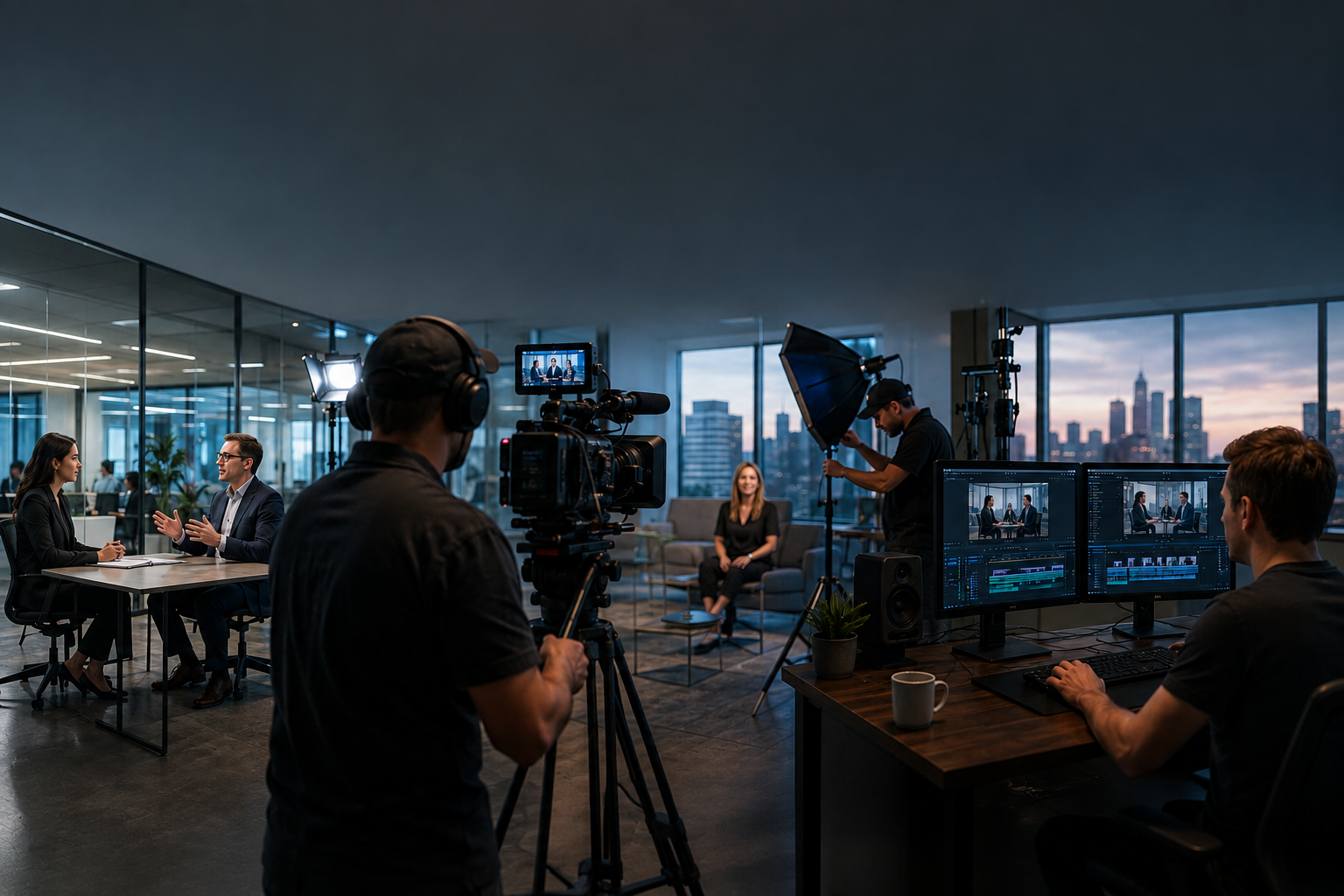
We shoot with multiple cameras and controlled lighting so the edit has cutaways and the interview feels polished without looking staged. Audio is where most testimonial videos fail. We record with broadcast-grade microphones and a professional audio tech on every shoot. Clear sound is the difference between a testimonial that feels real and one that feels amateur.
We also run longer interview sessions than most teams. Forty-five to sixty minutes of conversation gives us the raw material to build a focused 60 to 90 second cut. You can’t edit what you didn’t capture.
The Interview: Why Authentic Answers Matter
The interview is where credibility is won or lost. When the customer is comfortable and speaking in their own voice, the story sounds true. When they’re reading from a script or rushing through rehearsed lines, the audience notices immediately.
That’s why the conversation matters as much as the questions. We talk before the cameras roll. We get a feel for how someone tells their story naturally, and we build the interview around that rhythm. The goal is a conversation, not a performance.
For the audience, authenticity isn’t a style choice. It’s what makes the testimonial work at all. Viewers are sharper than marketers assume. They can tell when someone means it, and they can tell when they don’t.
Post-Production: Shaping the Story
Post is where the interview becomes a story.
Interviews almost never unfold in the right order. A good edit reorganizes the material into a clear problem, solution, outcome structure without stripping away the natural speech that makes it feel real. We leave in the pauses, the “you know what I mean”s, and the small moments that signal a real person thinking in real time. Over-editing is how testimonials start to sound like commercials.
Supporting footage smooths transitions and keeps the visuals interesting. Lower thirds with name, title, and company ground the story. Music stays subtle.
A useful deliverable set includes:
- A 60 to 90 second main video
- A 30 second cut for social platforms
- A 2 to 3 minute extended version for sales or stakeholder conversations
- Captions (required, and essential for the 85% of social video watched without sound)
Distribution: Where Testimonial Videos Earn Their Keep
Once the video is done, where you put it matters as much as how you made it.
On a homepage, a testimonial builds trust in the first ten seconds. On product or service pages, it reinforces specific use cases with a real example. For sales teams, a well-organized testimonial library (organized by industry, audience, or challenge) puts the right story in front of the right prospect at the right moment.
Email campaigns benefit from a video thumbnail that pulls attention to a specific outcome. LinkedIn is where short cuts earn their keep, in both organic and paid distribution. One well-produced testimonial shoot can generate assets for a full year of marketing if the material is cut thoughtfully.
FAQs
Specific outcomes, clear structure, and authentic delivery. A number or a concrete result (“saved us 10 hours a week,” “cut onboarding time in half”) gives the audience something to believe. A simple problem, solution, outcome arc makes the story easy to follow. Natural delivery, in the customer’s own words, is what makes it feel true.
Sixty to ninety seconds for most uses. That’s long enough to tell a complete story and short enough to hold attention. A thirty-second cut works well for social, and a two to three minute extended version is useful for sales conversations and stakeholder presentations.
Make it easy. We handle the logistics, keep the interview under an hour, and don’t ask anyone to memorize anything. When the process is respectful of the customer’s time and lets them speak naturally, most people are willing to participate, especially if they believe their story will help someone else.
Open-ended questions that invite a real story. What was the challenge? Why did you choose this solution? What changed? What would you tell someone else in your position? The follow-ups are where the best material comes from. A good interviewer listens for the moment where the real answer starts and follows it.
On your homepage, on product or service pages, in sales conversations, in email campaigns, and on LinkedIn. Shorter cuts work well for social and paid distribution. Longer cuts hold up for sales and stakeholder contexts where the detail matters.
Conclusion
A well-produced testimonial video starts with the right story and carries through every step of production, from the interview to the final cut. Done well, it becomes a piece of content your team can use for years.
RaffertyWeiss Media has spent 25 years producing testimonial videos for federal, nonprofit, association, and corporate clients from our Bethesda, Maryland studio. If your team is considering testimonials and wants the result to feel real instead of rehearsed, that’s the kind of work we do.
.webp)