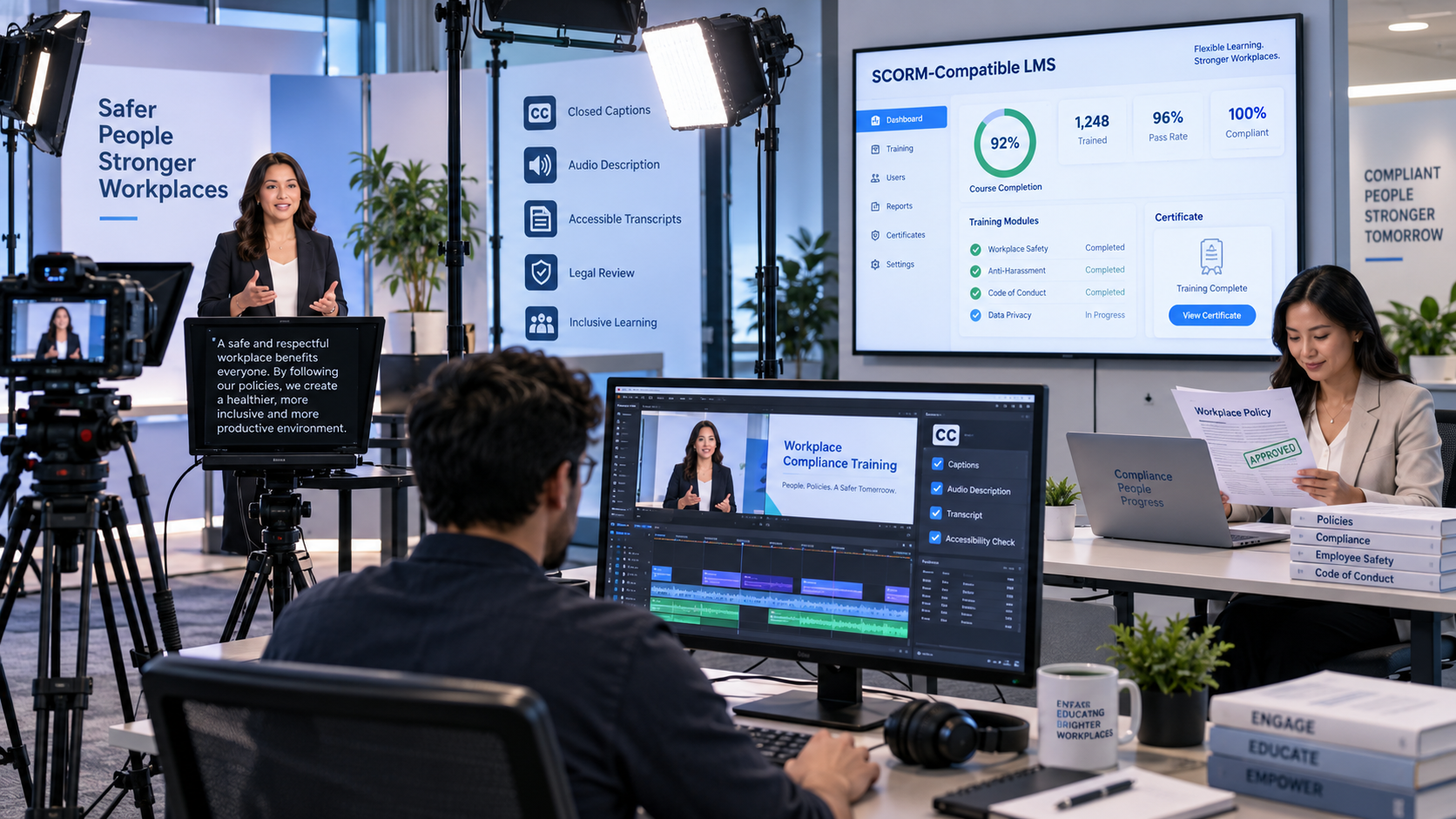
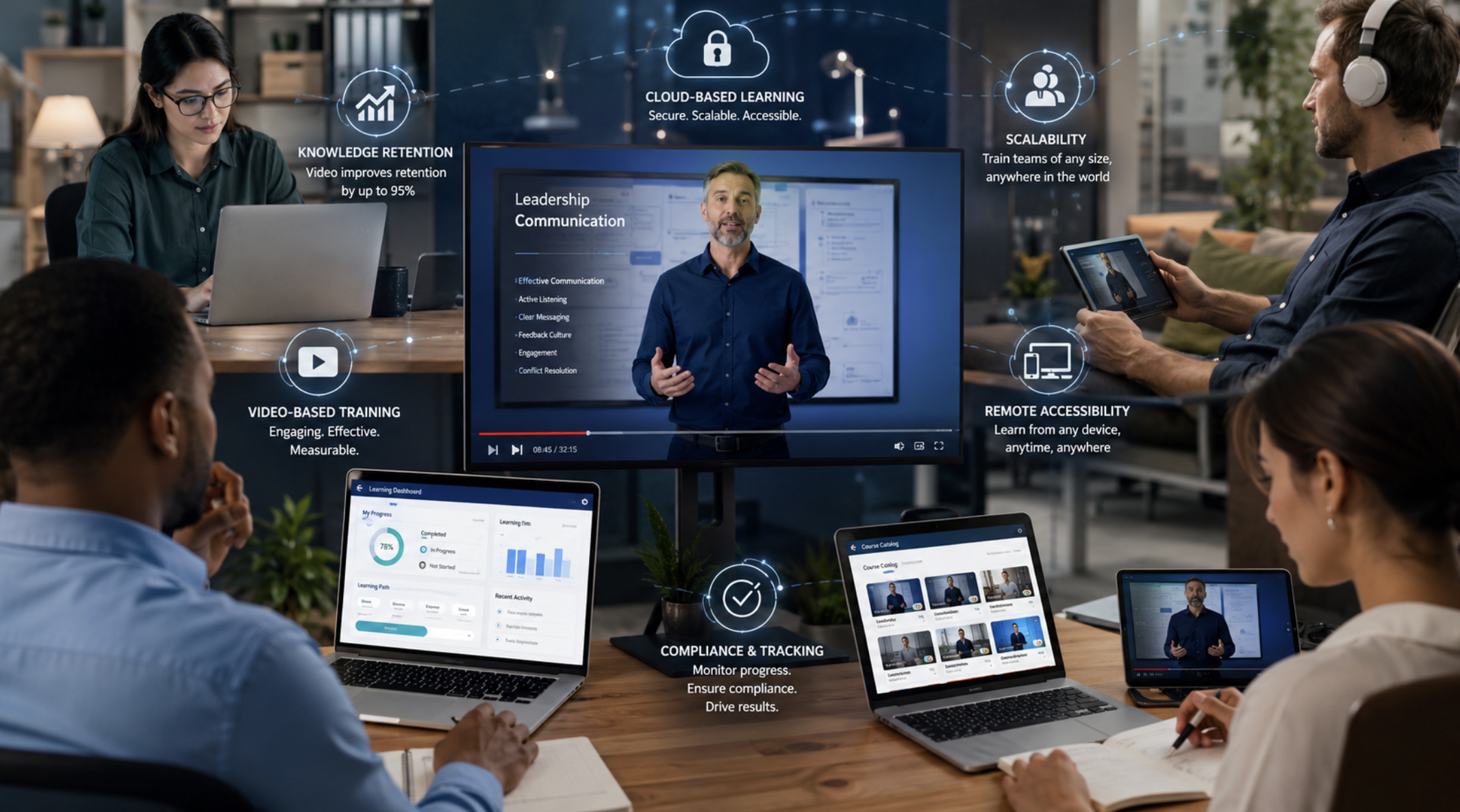
Compliance training videos need accurate, legally reviewed content, accessibility features built in from the start (captions, audio description, accessible transcripts), and SCORM-compatible packaging so completion can be tracked in an LMS.
RaffertyWeiss Media produces this type of training video in-house, handling accessibility deliverables and LMS packaging as part of the same production workflow rather than as separate add-ons.
The most common failure is turning a policy document into one long, unrevised video instead of focused, scenario-based modules that employees actually engage with.
Mandatory training creates a different production challenge. Employees are expected to complete the material, so the video needs to communicate the required information clearly rather than rely on entertainment to hold attention. A compliance training video also needs to account for accessibility, consistent delivery, and how the finished content will be used in an organization's training program.
For employee compliance training videos, that can mean workplace policies, safety procedures, privacy practices, or refresher training. This guide looks at the production decisions that matter, including accessible formats, LMS-ready delivery, content structure, and review cycles. RaffertyWeiss Media's eLearning work includes closed captioning, audio description, accessible PDF transcripts, and SCORM-compatible LMS packaging as part of its in-house production capabilities.
What makes compliance video different
Compliance training has constraints that general training video does not. The content can carry significant consequences for an organization, completion may need to be documented, and employees are often watching because the training is required rather than because they chose the subject.
The content requires careful review. Workplace conduct, safety procedures, privacy practices, and other compliance topics depend on accurate information. Scripts, visuals, examples, and supporting materials should be reviewed against the organization's approved content before production is finalized.
Completion may need to be documented. Compliance training may be delivered through an LMS where organizations assign courses and record completion. That affects how the content is structured and packaged. RaffertyWeiss Media handles SCORM-compatible LMS packaging in-house as part of its training and eLearning production capabilities.
The audience did not choose the subject. Employees completing mandatory training have a specific requirement to address. A compliance training video therefore needs a focused structure, clear explanations, and relevant workplace examples rather than entertainment for its own sake.
The types of compliance training that work well on video
Video is most useful when employees need to understand how a policy or procedure applies in a real situation. It can show a behavior, demonstrate a process, or break a complex subject into focused training modules.
Workplace harassment and conduct: Scenario-based video can turn general conduct guidance into specific workplace situations. For example, a training segment can show an interaction, explain what makes the behavior inappropriate, and clarify the appropriate response. This approach gives employees something concrete to evaluate instead of simply reading policy language aloud.
Safety and hazard orientation: A safety orientation video can show employees how workplace procedures apply before they begin work. RaffertyWeiss Media's training portfolio describes this format for manufacturing, construction, and other high-compliance environments. The content can focus on specific procedures and workplace conditions rather than presenting safety information as a general lecture.
Data handling and privacy: Video can be useful when employees need to follow a defined information-handling process. A screen demonstration or step-by-step explanation can show where information is entered, what steps the employee needs to follow, and which parts of the process require particular attention. The script and visuals should remain tied to the organization's approved procedures.
Industry-specific regulatory training: Specialized training needs to reflect the organization's actual operating environment and approved training material. Video can support this by combining on-camera instruction, animation, graphics-driven presentations, subject matter expert interviews, or role-playing scenarios, depending on what employees need to learn. RaffertyWeiss Media lists these as eLearning production formats.
Annual refreshers and recertification: A refresher does not necessarily need to repeat an entire training course. A focused module can address a changed policy, procedure, or specific topic employees need to revisit. Breaking the material into separate modules also makes it easier to revise the affected content when the underlying information changes.
For organizations planning compliance training, RaffertyWeiss Media provides eLearning and corporate training video production with support for accessible content and LMS-ready delivery. Learn more about eLearning and corporate training video production
Accessibility is not optional here
Accessibility needs to be planned alongside the script, visuals, and final delivery of a compliance training video. RaffertyWeiss Media handles closed captioning, audio description, accessible PDF transcripts, and SCORM-compatible LMS packaging in-house. These capabilities are especially relevant when training must be delivered through an LMS and made available in multiple formats.
Closed Captions: Closed captions present spoken dialogue as on-screen text and can identify relevant audio information. They give employees who are deaf or hard of hearing a way to follow the instructions. Captions also help when employees cannot clearly hear the audio during training.
Audio Description: Audio description adds spoken narration for important visual information that is not communicated through dialogue. In a compliance training video, that can include a demonstrated safety procedure, relevant on-screen information, or an action within a workplace scenario. This gives employees who cannot fully see the video access to information communicated visually.
Accessible PDF Transcripts: An accessible PDF transcript provides a readable version of the training content outside the video. For employee compliance training videos, it gives employees another way to review spoken instruction and relevant information presented visually.
These deliverables should stay aligned with the approved script and final edit. RaffertyWeiss Media's in-house approach brings captioning, audio description, accessible PDF transcripts, and SCORM-compatible LMS packaging into the same training production workflow, rather than treating them as unrelated deliverables.
Making it trackable
A compliance training video needs more than a finished edit. If the training will be delivered through an LMS, the content also needs to be packaged so the organization can assign it and document completion.
RaffertyWeiss Media provides SCORM-compatible LMS packaging in-house. SCORM packaging prepares training content for compatible learning management systems, giving the finished modules a defined structure for LMS delivery and completion tracking.
That requirement can shape the production plan before filming begins. A long presentation covering workplace conduct, safety procedures, and privacy practices may be better divided into separate modules. Each module can focus on one training topic and be handled as a distinct unit in the LMS.
For eLearning video production for compliance training, module planning also affects the script, editing, captions, audio description, accessible PDF transcripts, and final LMS packaging. Defining those pieces before production helps keep the finished training consistent from the first script review through delivery.
Why most compliance video gets ignored
A policy document is not automatically a training script. Reading approved policy language word for word can leave employees with information but little context for applying it. A stronger compliance video uses the approved policy as its source, then uses a specific workplace scenario, demonstration, or explanation to show how the policy applies.
One long module instead of several short ones: A single module can force unrelated topics such as workplace conduct, safety procedures, and privacy practices into one presentation. Separating those subjects into focused lessons makes each topic easier to locate and revisit. It also gives organizations more manageable content to review when one policy or procedure changes.
scenarios that no employee recognizes: A compliance scenario needs to reflect the type of situation the training is addressing. For workplace conduct training, that could mean showing a specific interaction and explaining the behavior employees are expected to recognize or address. For a safety orientation video, it could mean demonstrating a workplace procedure rather than describing it only through narration.
Never revised, so it references policies that have changed: Compliance content can become outdated when an organization's policy, procedure, terminology, or process changes. The video should be reviewed against the current approved material, including its script, visuals, captions, and accessible PDF transcript. For modular training, this can also make it easier to identify the specific lesson that needs revision.
What a good compliance video looks like
Workplace Harassment Refresher Training: Comments & Compliments, produced for Grace Hill, is a useful example of focused compliance training. The lesson centers on comments and compliments as a specific workplace conduct topic rather than trying to cover every harassment issue in one video.
That structure gives the script a clear subject and keeps the examples tied to the conduct being addressed. For compliance training, a defined topic such as workplace harassment and conduct can make the lesson more practical than a broad presentation covering unrelated policies.
Frequently Asked Questions
How long should a compliance training video be?
There is no fixed runtime for every compliance topic. A focused lesson can address one subject, while broader training can be divided into separate modules that are easier to review and deliver through an LMS.
Do compliance training videos need captions?
Plan captions as part of production when the training needs accessible delivery. RaffertyWeiss Media handles closed captioning, audio description, and accessible PDF transcripts in-house.
Can compliance videos be tracked in an LMS?
Yes, when the training is packaged for a compatible LMS. RaffertyWeiss Media provides SCORM-compatible LMS packaging for eLearning and training content.
How often should compliance training be updated?
Review the video when the policy, procedure, terminology, or process it covers changes. Check the script, visuals, and accessibility deliverables against the current approved training material before publishing the updated version.
Should compliance video use real employees or actors?
Either can work, depending on the training subject and production requirements. Actors can present a workplace conduct scenario, while employees or subject matter experts can provide direct context when their role is relevant to the training.
Create Compliance Training Videos That Balance Accuracy and Engagement
For more than 25 years, RaffertyWeiss Media has produced training content for organizations that need clear, reliable communication. Its work includes workplace compliance, safety orientation, accessible eLearning, and SCORM-compatible LMS packaging.
Whether you are developing compliance training videos for employees, updating refresher training, or producing a safety orientation video, the production approach should match the subject and the way employees will use the content.
For related guidance, read our employee onboarding videos article.
.webp)