Educational videos for organizations are video-based learning content designed to train employees, educate members, onboard new staff, communicate policy, or deliver compliance training. Unlike traditional classroom instruction, educational video allows learners to go at their own pace, rewatch difficult segments, and access content anywhere. For organizations, the business case is straightforward: video improves knowledge retention, reduces training costs at scale, and creates a consistent learning experience regardless of who delivers it.
Training directors, L&D managers, government communications teams, and nonprofit program coordinators all face the same challenge: "How do you deliver consistent learning experiences to large and often distributed audiences?" Whether you're onboarding new employees, explaining a new policy, or educating the public, the information needs to be clear, accessible, and repeatable.
That is why many organizations are investing in educational videos and instructional videos as a core part of their learning strategy. For more than 25 years, RaffertyWeiss Media has produced training and educational content for organizations including AARP, the Department of Defense, the CDC, and HHS, helping teams deliver clear, accessible learning experiences for employees, members, and public audiences.
The Organizational Case for Educational Video
Organizations often turn to educational videos when they need to train large groups efficiently while maintaining consistency. Unlike live instruction, video allows learners to move at their own pace, revisit difficult concepts, and access information when it is most relevant to them.
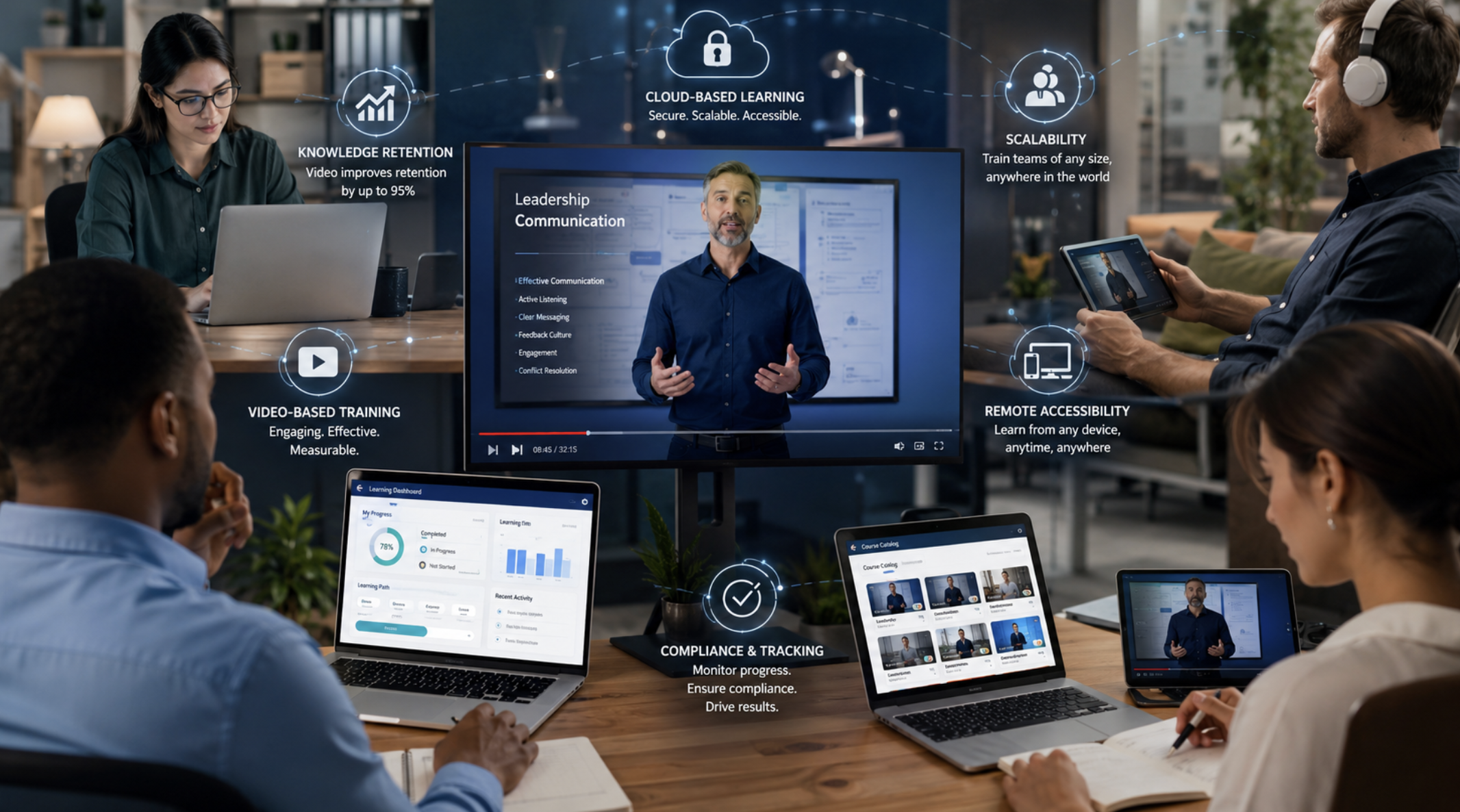
Video supports learning through a combination of visual, audio, and written information. Learners can watch demonstrations, hear explanations, and review captions or transcripts when needed. This multimodal approach can be especially helpful when explaining processes, procedures, or technical concepts.
Consistency is another major advantage. A training session delivered by different instructors may vary from one location to another. Instructional videos provide the same message to every learner, whether they are the first employee trained or the 10,000th.
Cost efficiency becomes increasingly important as organizations grow. For example, a $15,000 training video used by 5,000 employees costs approximately $3 per learner. By comparison, a single in-person training day for 25 employees at $500 per person would cost $12,500 before considering travel, scheduling, or lost productivity.
Educational videos also support accessibility goals. Captions, transcripts, and accessible delivery methods help accommodate learners with different needs, including learners with hearing loss, non-native English speakers, and remote teams.
Organizations commonly invest in video-based training during periods of rapid hiring, compliance updates, LMS implementation, workforce expansion, or public education initiatives. RaffertyWeiss Media helps organizations account for these learning, accessibility, and delivery needs early in the educational video production process.
Types of Educational Videos Organizations Commission
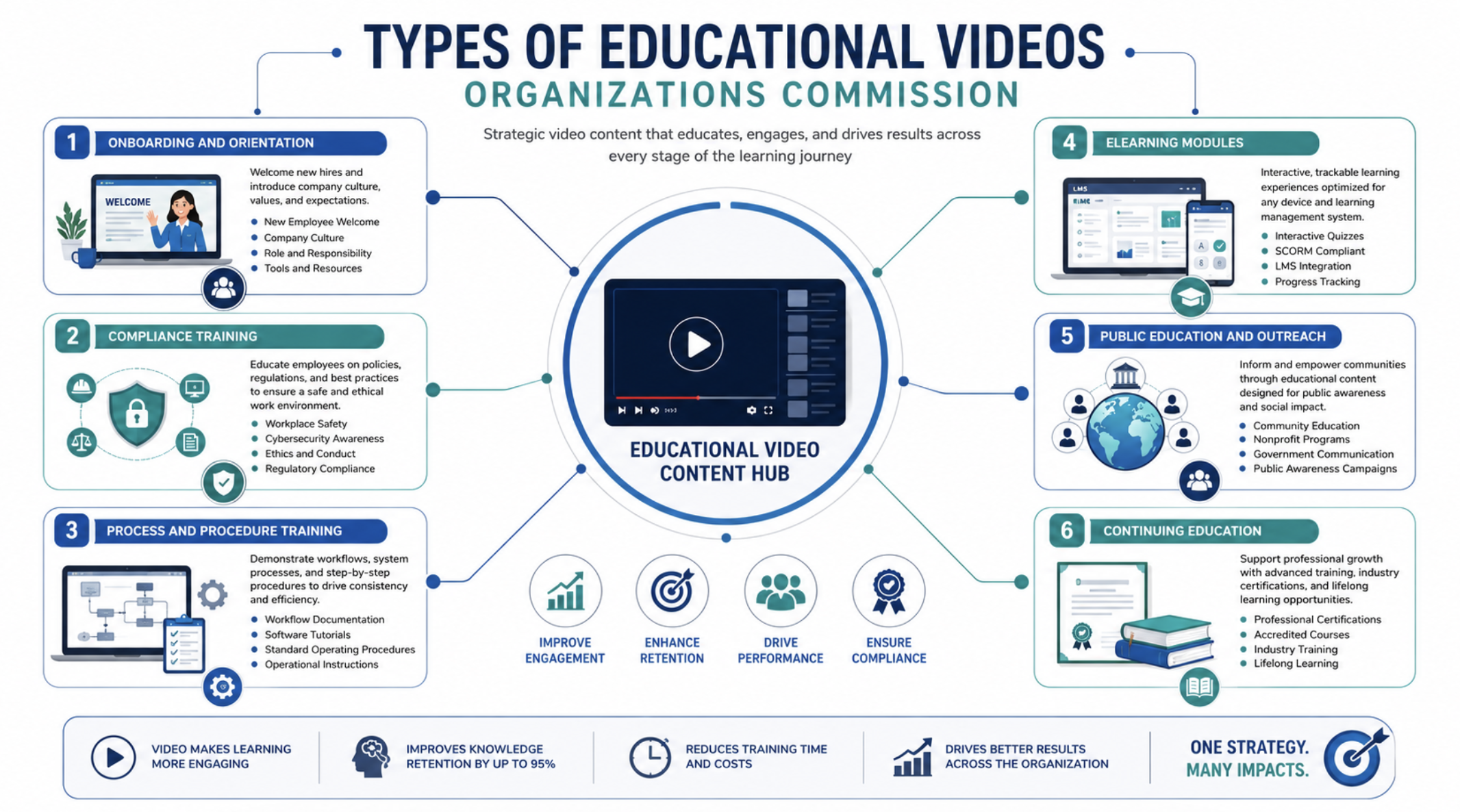
Different learning goals call for different types of educational video and training content. Understanding the options helps organizations choose a format that fits the audience, learning objective, and delivery environment.
Here's this table converted to match your reference styling: ```html| Type | Best For | Typical Delivery |
|---|---|---|
| Onboarding and orientation videos | New hires | Video/LMS |
| Compliance training videos | Mandatory training | LMS |
| Process and procedure instructional videos | Workflow consistency | Video/LMS |
| eLearning modules | Interactive learning | SCORM |
| Public Education and outreach videos | External audiences | Web/video |
| Continuing Education (CE/CME) | Professional education | LMS |
Onboarding and Orientation Videos
Onboarding videos introduce new employees to an organization's culture, policies, procedures, and systems. They provide a consistent starting point for every new hire and help reduce the time managers spend repeating the same information.
These learning videos are particularly valuable for organizations with frequent hiring needs, multiple locations, or remote employees who may never attend an in-person orientation.
Compliance Training Videos
Federal agencies and private organizations often use compliance training videos to deliver consistent instruction on workplace safety, ethics, harassment prevention, cybersecurity, and regulatory requirements. Accuracy and consistency are critical because employees must receive the same information regardless of location or department.
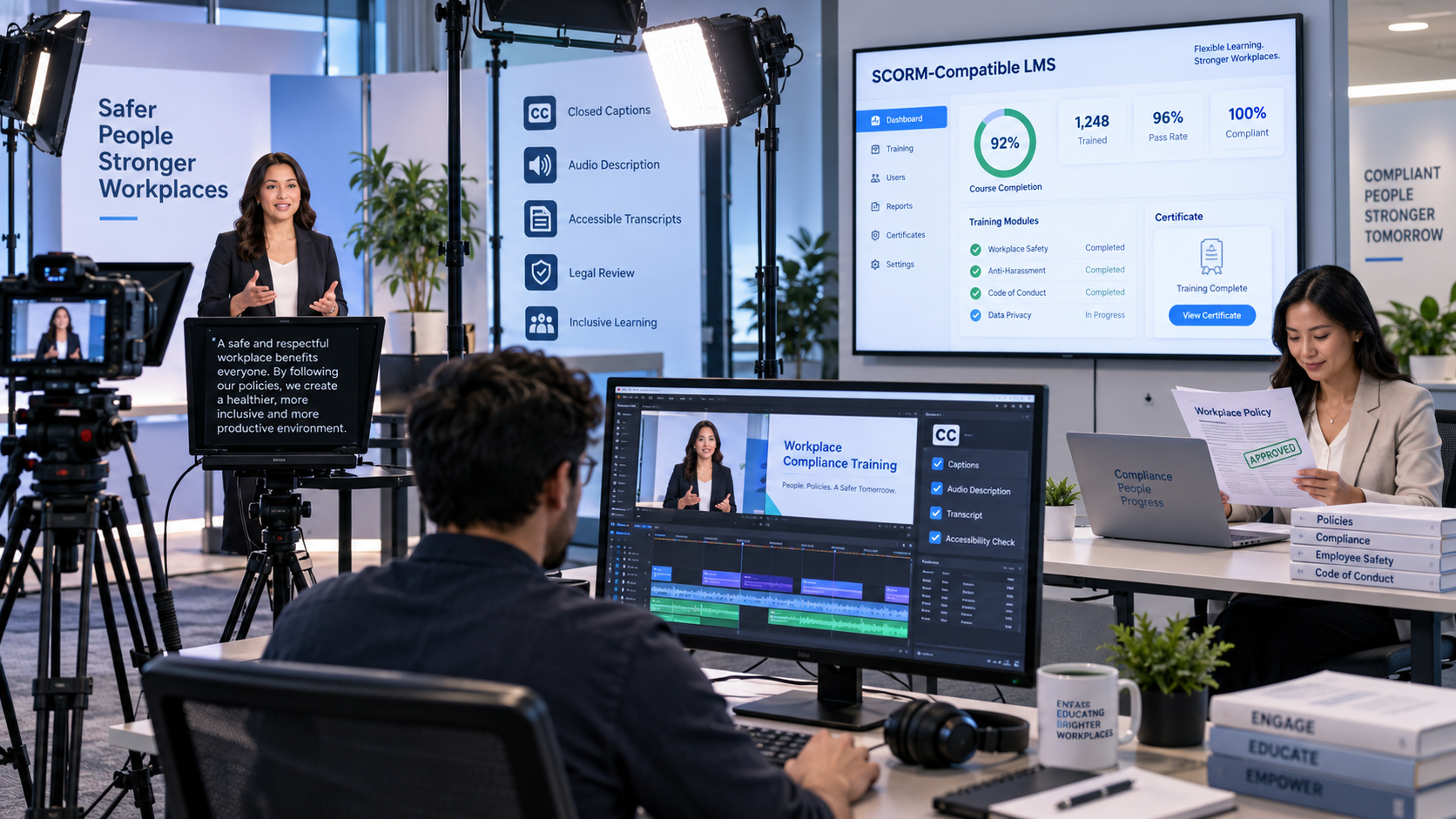
Video-based compliance programs can also simplify updates when policies or regulations change. For federal agencies, the final training video must also meet Section 508 accessibility requirements, including captions, audio descriptions, and an accessible media player. Organizations that need legally reviewed, consistently delivered compliance learning may use corporate training video production to support planning, delivery, and future updates.
Process and Procedure Instructional Videos
Many organizations use instructional videos to document workflows, software processes, equipment operation, and standard operating procedures.
These videos are especially useful for technical teams, distributed workforces, and organizations that need consistent execution across multiple locations. Employees can reference the content as needed rather than relying solely on written documentation or memory.
eLearning Modules (SCORM-Compatible)
eLearning modules combine video with interactive learning experiences. They may include quizzes, branching scenarios, knowledge checks, and completion tracking through a learning management system.
Organizations with established LMS platforms often choose eLearning video production when they need interactive content with completion tracking. SCORM-compatible content allows administrators to track completion rates, assessment scores, and learner progress.
Public Education and Outreach Videos
These projects require careful instructional design, review processes, and subject matter expertise. RaffertyWeiss Media produced the multilingual AARP SmartDriver training series in Spanish, Mandarin, Korean, and Portuguese.
Continuing Education (CE/CME) Content
Professional associations, healthcare organizations, and certification providers often develop accredited learning programs that support continuing education requirements.
These projects require careful instructional design, review processes, and subject matter expertise. RaffertyWeiss Media has experience supporting educational initiatives for associations and large-scale learning programs such as AARP SmartDriver, which delivers driver education content to diverse audiences.
Educational Video for Government and Federal Agencies
Educational content for federal agencies often involves requirements that go beyond standard corporate training. Accessibility, compliance, security, and public accountability all play important roles in the production process.
One of the most important requirements is Section 508 compliance. Educational videos produced for federal agencies must meet Section 508 accessibility requirements, including captions, audio descriptions when appropriate, transcripts, and accessible media players. Accessibility is not an optional enhancement; it is a requirement.
Government learning content must also follow federal plain language standards. Educational materials should communicate complex information clearly and avoid unnecessary jargon. This is especially important when content is intended for public audiences.
Many federal education and outreach initiatives require multilingual delivery. Public health campaigns, workforce development programs, and community education efforts often need content available in multiple languages. RaffertyWeiss Media has produced multilingual educational content in Spanish, Mandarin, Korean, and Portuguese, including the AARP SmartDriver training series.
Technical delivery requirements also matter. Federal agencies frequently use LMS platforms that require SCORM-compatible training content. Some federal projects also involve controlled information or security requirements, so production planning may need to address content handling and access protocols before work begins. Proper SCORM packaging and testing help ensure that learning modules function correctly within agency systems and reporting environments.
RaffertyWeiss Media brings experience supporting projects for organizations including AARP, the Department of Defense, the Centers for Disease Control and Prevention (CDC), and the U.S. Department of Health and Human Services (HHS). That experience helps RaffertyWeiss Media approach government video production projects with accessibility, compliance, instructional clarity, delivery requirements, and agency-specific handling needs in mind from the start.
Animation vs. Live Action for Educational Content

For organizations planning educational videos, the right format depends on the subject matter, audience, learning objectives, and delivery needs.
When Animation Makes Sense
Animation is often a strong fit when explaining complex processes, abstract concepts, or sensitive topics. It can simplify technical information, visualize ideas that cannot easily be filmed, and maintain consistency across language versions.
Animation and motion graphics can also be useful when content requires frequent updates or when visual clarity is more important than showing real people or environments.
When Live Action Works Best
Live-action video works particularly well when authenticity matters. Leadership messages, workplace demonstrations, interviews, and real-world scenarios often benefit from seeing actual people and environments.
Organizations frequently use live-action instructional videos for hands-on training, executive communications, and employee education programs where human connection plays an important role.
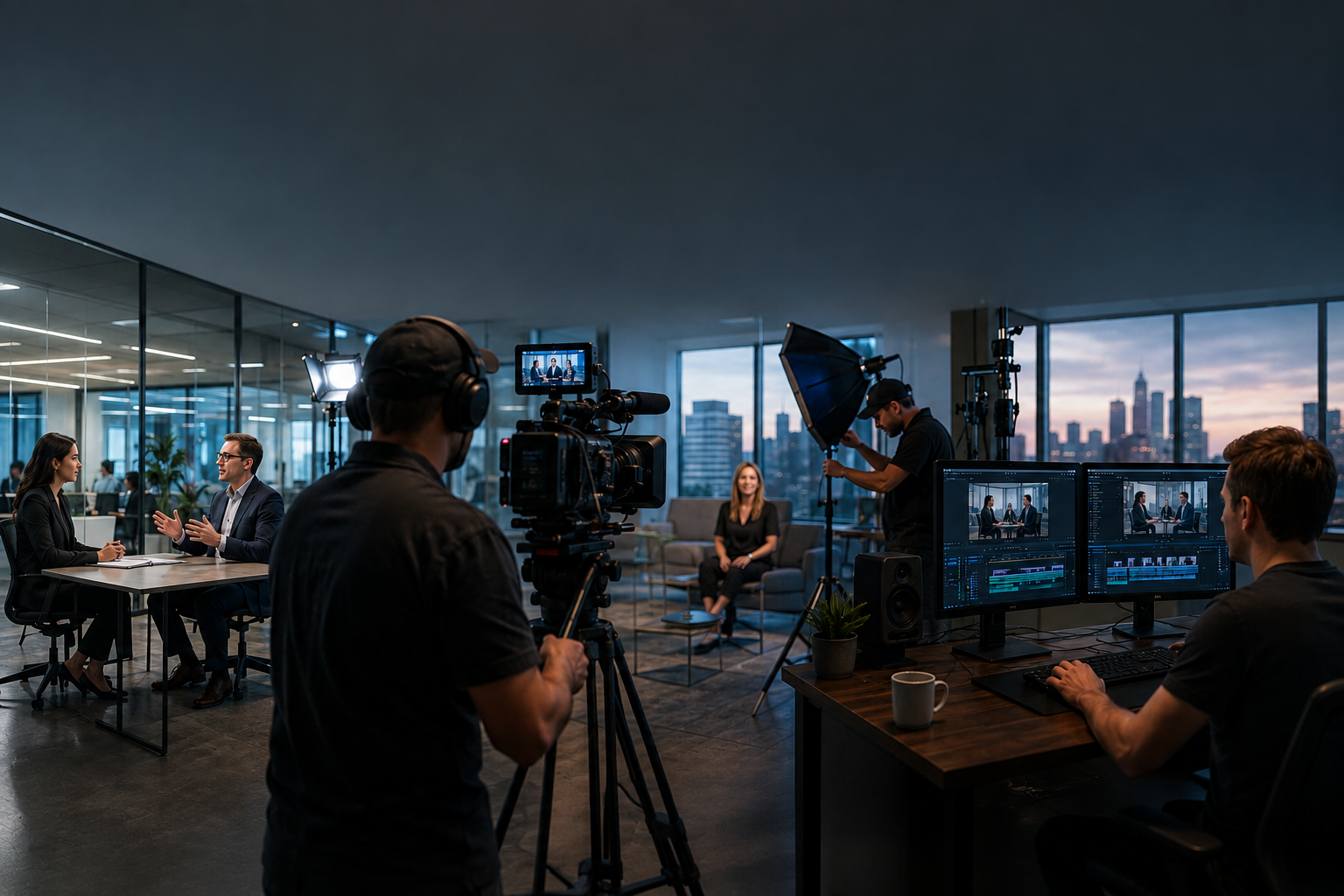
RaffertyWeiss Media helps organizations weigh these format choices early, based on what learners need to understand and how the finished content will be delivered. In many cases, a blended approach combines live-action footage with graphics, animation, and on-screen instruction to create a clearer learning experience.
What to Expect from the Educational Video Production Process
For organizations, a successful educational video project begins well before filming or animation begins. The process should establish clear learning goals, define the role of subject matter experts, and confirm how the finished content will be reviewed and delivered.
Start with Learning Objectives
The first step is defining what learners should know, understand, or be able to do after completing the training. Clear learning objectives guide every production decision and help ensure the final content supports organizational goals.
Collaborate with Subject Matter Experts
Subject matter experts from the organization play a critical role throughout the project. They provide technical accuracy, review content, and help identify the information learners need most.
Organizations should identify the SMEs who can clarify technical points, approve content, and participate in reviews before production begins. Early SME involvement often leads to smoother production and fewer revisions later in the process.
Script and Storyboard Development
Once objectives are defined, the production team translates approved information into scripts and visual plans. Storyboards help stakeholders review the structure, pacing, visual approach, and instructional flow before production begins.
This stage gives stakeholders an opportunity to consolidate feedback and make adjustments while the work is still in development, before changes become more time-consuming or costly.
Final Delivery and LMS Readiness
Educational content may be delivered in several formats depending on how it will be used.
Common deliverables include:
- MP4 video files for standalone distribution
- SCORM packages for LMS deployment
- Caption files for accessibility compliance
- Accessible video embeds for websites and portals
Organizations that need SCORM packaging, knowledge checks, or completion tracking may require eLearning video production rather than a standalone training video. RaffertyWeiss Media helps organizations confirm delivery requirements early, so the final training content works with existing systems, accessibility needs, and distribution plans.
Frequently Asked Questions
An instructional video is a linear video designed to explain information, demonstrate a process, or provide training. An eLearning module combines video with interactivity through quizzes, branching scenarios, and knowledge checks, and may be packaged as SCORM-compatible content for delivery through a learning management system.
Organizations that need completion tracking, assessment scores, and learner reporting typically choose eLearning modules. A standalone instructional video may be sufficient when the goal is to explain a process or communicate information without interactive elements or LMS tracking.
Educational video costs vary based on the project's scope, format, and delivery requirements. Basic instructional videos typically range from approximately $3,000 to $10,000, while interactive eLearning modules can range from $15,000 to $60,000 or more.
Factors affecting cost include whether the project uses animation versus live action, interactivity, language versions, the number of modules, and SCORM packaging requirements.
Section 508 is the federal accessibility standard for digital content. Educational videos must support accessibility through captions, audio descriptions when needed, transcripts, and accessible media players.
It is required for federal agency content and considered a best practice for public-facing educational materials.
The ideal length depends on the learning objective and delivery context. Microlearning content is often between three and five minutes, while compliance training modules may run 15 to 30 minutes.
A useful guideline is to organize each video around a single learning objective rather than trying to cover an entire topic in one video.
Yes. Educational content can be translated, localized, or produced as language-specific versions for different language audiences. The appropriate approach depends on the audience, learning context, and whether the video requires new narration, on-screen text, or culturally specific examples.
RaffertyWeiss Media has produced multilingual learning content in Spanish, Mandarin, Korean, and Portuguese for projects including the AARP SmartDriver training series.
Common delivery formats include MP4 files for standalone viewing, SCORM packages for LMS deployment, captioned versions for accessibility, and accessible embeds for web delivery.
Organizations should confirm delivery requirements with their production partner early in the project, based on where learners will access the content and whether the organization needs LMS tracking, web delivery, or accessibility support.
SCORM is a packaging standard for eLearning content delivered through a learning management system (LMS). It enables organizations to track course completion, quiz scores, and learner progress.
If your organization uses an LMS and requires reporting, you will generally need SCORM-compatible content. If you are simply publishing a video on a website, SCORM is generally not necessary.
Ready to Build Educational Content That Scales?
Educational videos give organizations a practical way to deliver consistent training, improve accessibility, and support learners wherever they are. Whether you're onboarding new employees, meeting compliance requirements, or developing a full eLearning program, thoughtful planning helps ensure your content serves both your audience and your goals.
For more than 25 years, RaffertyWeiss Media has produced training and educational videos for AARP, the Department of Defense, the CDC, and HHS. Based in Washington, D.C. and working with clients nationwide, RaffertyWeiss Media provides eLearning video production and corporate training video production for organizations that need clear, accessible learning content. For more than 25 years, RaffertyWeiss Media has produced training and educational videos for AARP, the Department of Defense, the CDC, and HHS. Based in Washington DC and working with clients nationwide, we produce eLearning modules, instructional videos, and Section 508-compliant training content for organizations that need clear, accessible learning at scale.
If you are planning a training video, compliance program, or eLearning initiative, we are happy to walk through your requirements and share relevant work before you commit to anything.
.webp)