Nonprofit video production is the process of creating video content, fundraising appeals, impact stories, event coverage, donor reports, and advocacy campaigns that communicate an organization's mission and drive supporter action. Effective nonprofit videos don't require large budgets. They require a clear message, a real human story, and production quality that reflects the professionalism of the organization. The nonprofits that generate the most engagement from video are those that lead with the beneficiary's story, not the organization's accomplishments.
Nonprofit communications directors, development teams, and executive leaders are often asked to achieve ambitious fundraising and engagement goals with limited resources. That is why nonprofit and charity video production work best when planned as communication strategies rather than treated as stand-alone creative projects.
Whether you're launching a fundraising campaign, building awareness around a cause, or strengthening donor relationships, nonprofit storytelling videos can help audiences understand the need, connect with people affected, and see a clear next step. For more than 25 years, RaffertyWeiss Media has worked with nonprofit clients including AARP, United to Beat Malaria, Girl Up, and the American Red Cross to share mission-driven stories through video, animation, live events, and digital content in Washington, D.C., and across the country.
Why Video Works for Nonprofits (and When It Doesn't)
Nonprofits are often tasked with explaining complex challenges, demonstrating impact, and inspiring action, all within a limited amount of time. Video brings those goals together by combining visuals, voices, and real-world experiences into a format that can help audiences understand a specific challenge, the people affected by it, and the action the organization is asking them to take.
Unlike a report, brochure, or presentation, a video allows supporters to see and hear directly from the people affected by an organization's work. That human connection can make fundraising campaigns, advocacy initiatives, and donor communications more memorable.
Video can also support multiple objectives at once. A single production may provide content for a website, social media campaign, donor event, email outreach, and future fundraising efforts. For organizations working with limited budgets, that versatility matters.
However, video is not always the right solution. If an organization doesn't have a clear audience, a specific goal, or a plan for distribution, even a well-produced video may struggle to reach the intended audience or prompt the desired action. Successful nonprofit marketing videos begin with strategy. The camera should support the message, not replace it.
The Story-First Framework for Nonprofit Video
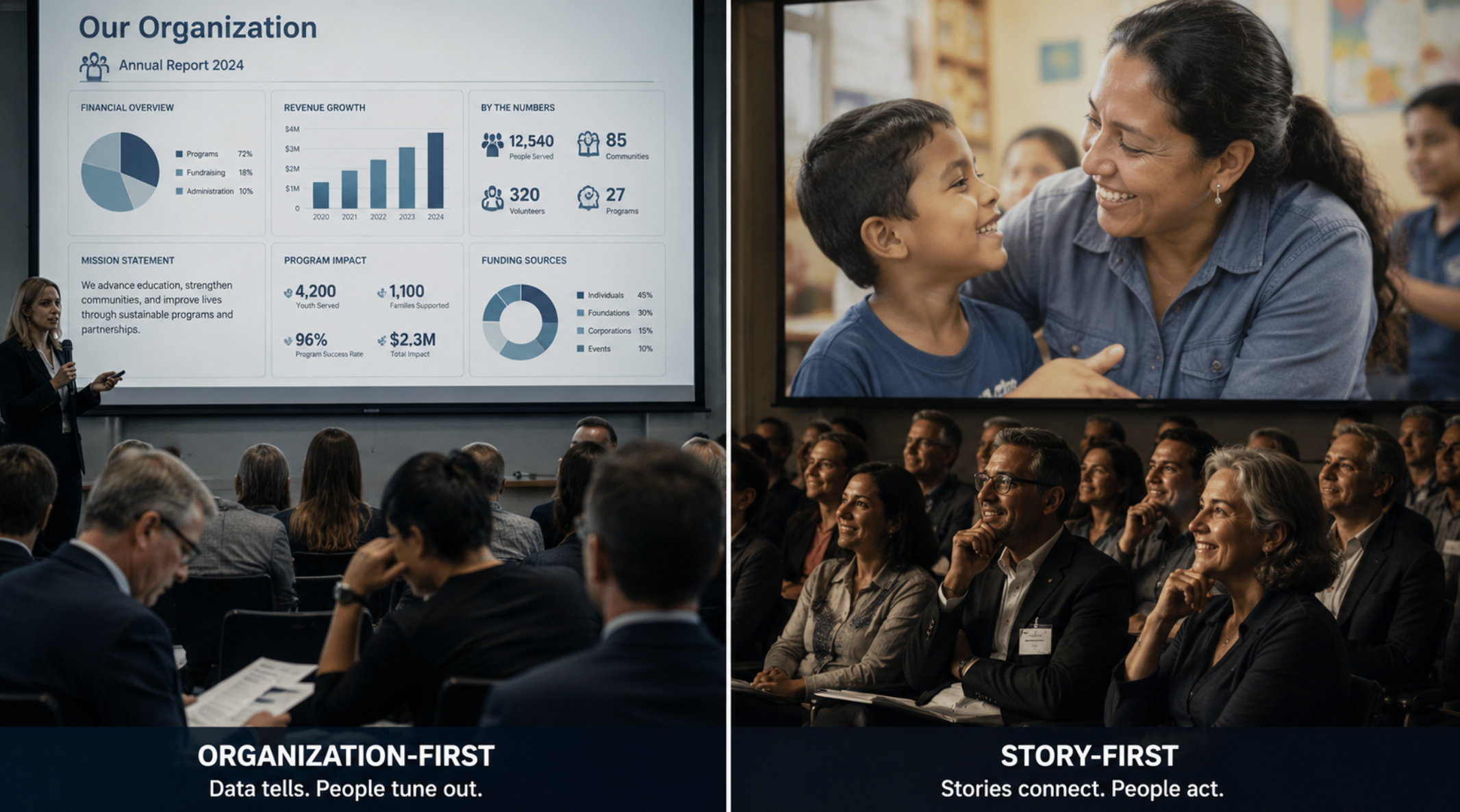
Many organizations make the mistake of starting a video with their history, mission statement, or accomplishments. While those details matter, they rarely give viewers an immediate reason to care.
Strong nonprofit storytelling videos often begin with a person.
Instead of leading with organizational achievements, the story should focus on the individual, family, or community whose life has been affected by the nonprofit's work. A specific person gives audiences a more immediate way to understand the organization's work than an institutional message alone.
Consider the difference between saying, "We serve 10,000 children every year," and introducing viewers to "Maria, a 9-year-old in Baltimore who gained access to educational support through a community program." Both statements are true, but the second example gives viewers a clearer picture of what the organization's work means in one person's life.
The Three-Part Story Structure
A clear three-part structure can help organizations shape a focused nonprofit video story:
Problem
Introduce the challenge. Help viewers understand the obstacle, need, or issue that exists.
Transformation
Show the change that occurred. Demonstrate how support, services, or community action helped improve the situation.
Invitation
After the story has established the need and the change made possible, give viewers a clear next step. Whether the goal is donating, volunteering, attending an event, or sharing information, the audience should understand how they can help.
This structure connects the need, the organization's impact, and the audience's next step without asking one video to explain everything at once.
Common Mistakes Nonprofits Make
Several common mistakes can reduce a video's effectiveness:
- Leading with organizational history instead of human stories
- Overloading viewers with statistics and information
- Trying to cover too many messages in one video
- Asking for donations before the audience understands the need and the impact of the organization's work
- Focusing on the organization rather than the people it serves
When nonprofits prioritize authentic stories and clear messaging, fundraising videos can give supporters a more direct understanding of the people and communities the organization serves.
Types of Nonprofit Videos (and What Each One Is Best For)
Different nonprofit goals call for different types of video. Choosing a format based on the audience, call to action, and distribution plan can help organizations use their resources with purpose.
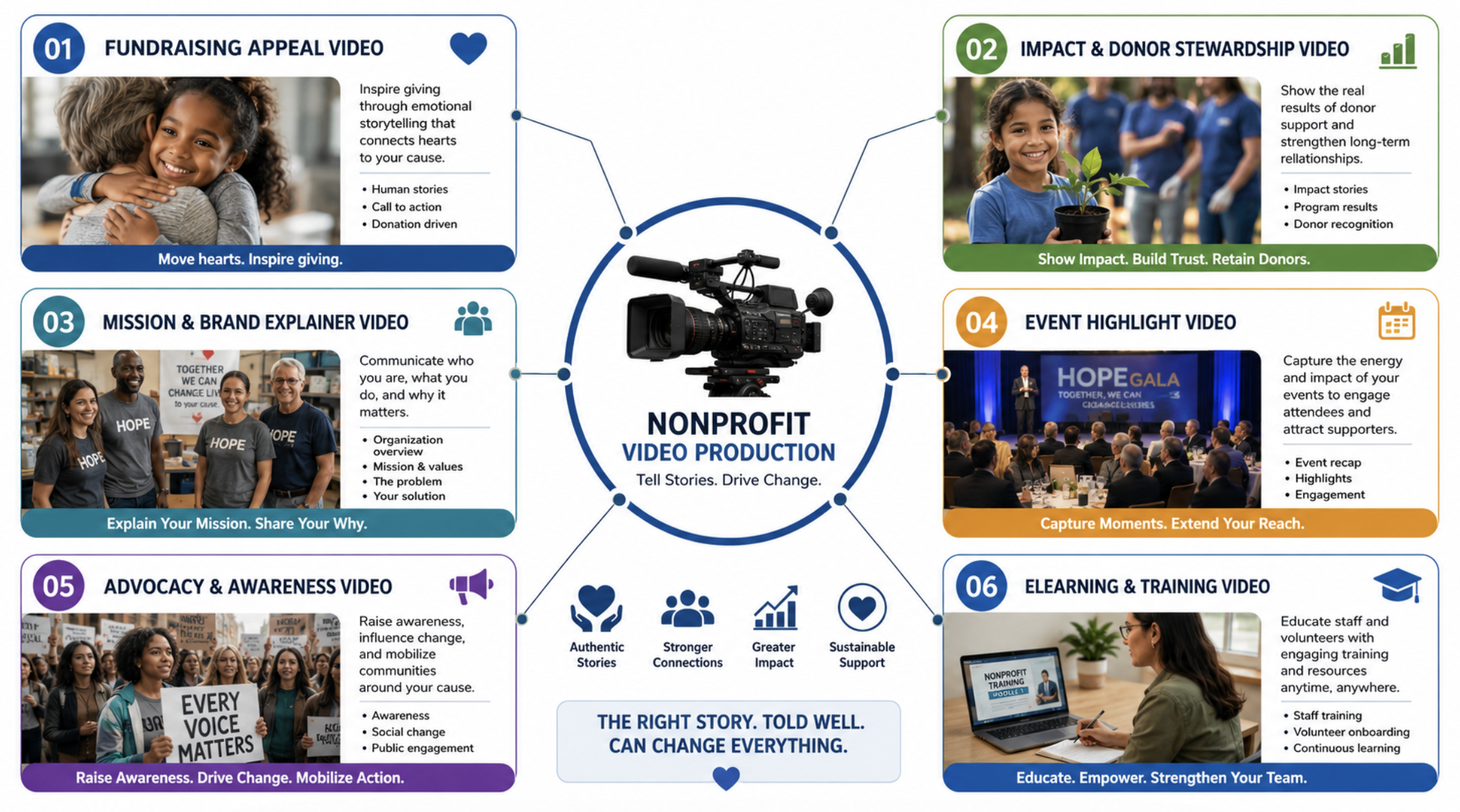
Fundraising Appeal Videos
Fundraising appeal videos are designed to support a direct donation ask. They are often used during annual campaigns, Giving Tuesday initiatives, and capital campaigns, where a personal story can establish the need before the organization asks viewers to contribute.
A 60–90 second format is often a practical fit for online fundraising videos because it gives the story time to establish context while keeping the request focused.
Impact and Donor Stewardship Videos
Impact and donor stewardship videos show supporters what their contributions helped make possible. They can combine outcome information with beneficiary stories to provide accountability and reinforce the connection between donor support and the organization's work.
These videos are particularly useful for donor cultivation, annual reports, and major donor engagement. Most are between two and three minutes long.
Mission and Brand Explainer Videos
Mission videos answer a simple question: Who are you, and what do you do?
These videos provide a concise overview of an organization's purpose, services, and community impact. They are often best for website homepages, new partner onboarding, grant proposals, and other moments when the organization needs to explain its work clearly.
A 90-second format often works well because it provides enough context without overwhelming viewers.
Event Highlight Videos
Whether it's a fundraising gala, community walk, conference, or advocacy event, event highlight videos capture energy and participation.
These videos are best used for post-event donor follow-up, attendee recognition, and promoting future events. Most event highlights are between 60 and 90 seconds long.
Advocacy and Awareness Videos
Advocacy videos focus on educating audiences about issues and encouraging action. Depending on the campaign, that action may involve policy engagement, community participation, or broader public awareness.
These videos work well for social media campaigns, legislative outreach, and public-awareness initiatives, with the length and format shaped by the audience and distribution platform. Organizations can review our nonprofit video work when evaluating approaches for advocacy and awareness campaigns.
eLearning and Training Content
Not all nonprofit video production is public-facing.
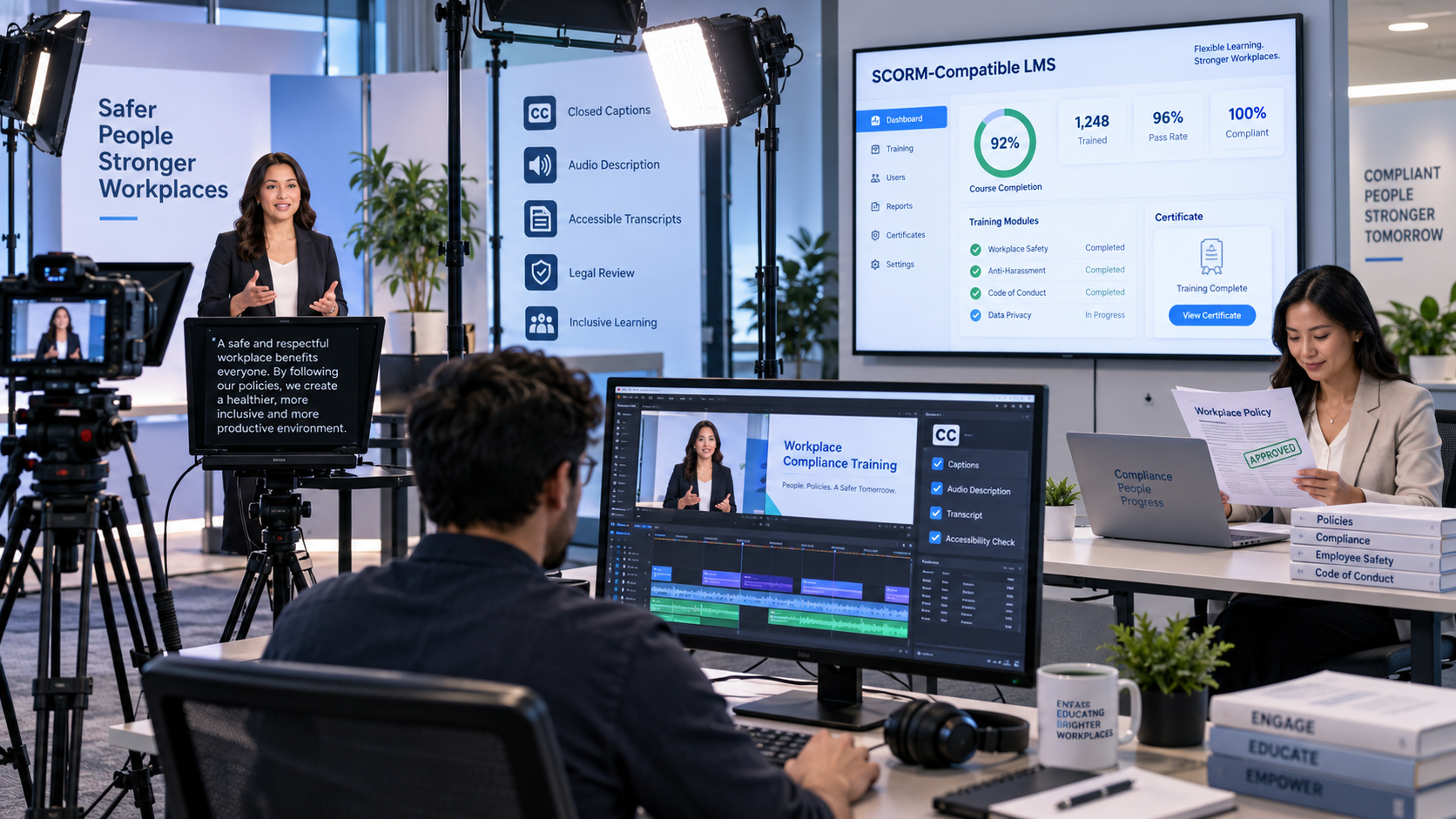
Many organizations use video to train staff, onboard volunteers, and provide consistent information across multiple locations. Video-based learning can help improve consistency while reducing the need for repeated live training sessions.
Organizations with distributed teams or high volunteer turnover may benefit from eLearning and training video production for internal education and onboarding.
What Does Nonprofit Video Production Cost?
One of the most common questions nonprofits ask is how much video production costs. The answer depends on the project's scope, timeline, production approach, and deliverables.
The ranges below provide general planning estimates for nonprofit video production:
| Video Type | Typical Range | Best Use |
|---|---|---|
| Basic mission video or social media clip | $2,000–$8,000 | Awareness and social content |
| Fundraising appeal video | $8,000–$20,000 | Campaigns and donor outreach |
| Multi-video campaign | $20,000–$60,000+ | Large fundraising or advocacy initiatives |
These figures should be viewed as general estimates. Actual costs vary based on the story, logistical needs, and final deliverables required for the project.
What Drives Cost?
Several factors influence pricing:
- Number of filming days
- Travel and location requirements
- Subject coordination and interview scheduling
- Motion graphics or animation
- Voiceover needs
- Number of final deliverables
- Review and approval requirements
A one-day local production will generally cost less than a multi-location campaign requiring extensive travel and post-production.
How to Stretch Your Budget
A larger budget is not always necessary for an organization to produce a clear, credible video.
Organizations can make a limited budget go further by coordinating multiple interviews on the same production day and planning several video versions from a single shoot. Capturing additional B-roll, event footage, and social media content at the same time can also improve long-term value.
Planning distribution before production begins is equally important. Knowing where content will be used helps shape creative decisions and can reduce spending on deliverables the organization does not need.
How to Choose a Nonprofit Video Production Company
Choosing the right partner involves more than comparing portfolio examples and pricing. A nonprofit video production company should understand your mission, audience, and the practical realities that shape the project, including budget, stakeholder reviews, and distribution needs.
The strongest partnerships begin with questions about your communication goal, target audience, and intended use, not cameras.
What to Prepare Before the First Call
Before speaking with a production company, it helps to define:
- Your target audience
- Campaign objectives
- Desired call to action
- Potential interview subjects or beneficiary stories
- Distribution channels
- Budget expectations
- Project timeline
Having these details prepared allows for more productive planning conversations and helps the production partner recommend an appropriate scope and set of deliverables.
What to Look for in a Portfolio
A portfolio should demonstrate more than technical quality.
Look for examples of authentic interviews, strong storytelling, and clear communication. Consider whether the work feels genuine and whether the production team has experience helping organizations communicate complex missions with care and clarity.
For nonprofits, authenticity often matters more than flashy visuals.
Questions Worth Asking
When evaluating a potential partner, consider asking:
- How do you approach story development?
- What deliverables are included?
- How are revisions handled?
- Have you worked with organizations like ours?
- How do you help clients prepare for interviews and filming?
- How will the final video be adapted for our website, donor outreach, social media, or events?
RaffertyWeiss Media has worked with nonprofits of every size - from grassroots organizations with limited budgets to national associations with multi-platform campaigns. Our clients include Howard Hughes Medical Institute, AARP, Girl Up, United to Beat Malaria, Four Block, and the American Red Cross.
Every project starts with your communication goal: who you are trying to reach, what you need them to feel, and what you need them to do. Camera decisions come after that. If you are evaluating video production partners for an upcoming campaign, we are happy to walk you through our process and share relevant work before you commit to anything.
Frequently Asked Questions
Nonprofit video production costs vary depending on the project's scope, production requirements, and final deliverables. A basic mission video or social media clip may range from $2,000–$8,000, while a fundraising appeal video typically falls between $8,000–$20,000. Larger campaigns with multiple deliverables, locations, or animated elements can range from $20,000–$60,000 or more.
These are general planning estimates. Costs are influenced by factors such as shoot days, travel, interviews, motion graphics, and the number of final video versions needed. Exact pricing should be confirmed based on the organization's goals, timeline, and distribution needs.
Fundraising appeal videos are often the best fit for direct donation campaigns because they pair a specific beneficiary story with a clear call to action. Impact and donor stewardship videos help donors understand what their contributions helped make possible, making them useful for stewardship and major donor outreach. Event highlight videos can also support fundraising by extending the value of galas, walks, conferences, and other community events through post-event donor follow-up and future promotion.
For social media campaigns and online donation appeals, 60–90 seconds is often enough to establish the need and make a clear ask. For major donor presentations, campaign launches, or board meetings, videos in the 2–3 minute range provide more room for context and storytelling.
The right length depends on the audience, distribution channel, and the action the organization needs viewers to take. Shorter videos are often easier to share, while longer videos can support more detailed storytelling when viewers have more time and context.
Yes. A nonprofit can produce a professional video on a limited budget when the project scope, story, and deliverables are planned carefully. Many organizations make the most of limited budgets by consolidating filming into a single production day, creating multiple edits from one shoot, and repurposing existing event footage or B-roll when appropriate.
Authentic interviews and real stories can help an organization communicate its mission without requiring a highly scripted production. Clear planning around the audience, message, and distribution needs often matters more than a larger production budget.
A nonprofit video is most effective at supporting donations when it centers on a specific person or community, explains the need clearly, and gives viewers a straightforward next step. A strong video establishes the challenge, shows the transformation made possible by support, and ends with a clear invitation to act.
When emotional truth, a clear fundraising ask, and production quality that reflects the organization's professionalism come together, viewers can better understand the need, the nonprofit's role, and how they can help.
It depends on the purpose of the video. In-house teams can often create effective social media clips, event updates, and day-to-day content. For major donor campaigns, broadcast PSAs, advocacy initiatives, or videos that represent the organization publicly, working with an experienced nonprofit video production company can provide strategic guidance, story development, and production support aligned with the organization's audience, message, and delivery needs.
Ready to Tell Your Organization's Story on Video?
The most effective nonprofit videos begin with a clear goal, a strong story, and a thoughtful plan for reaching the right audience. Whether you're creating a fundraising appeal, an impact story, or a larger advocacy campaign, preparation helps your organization use every production dollar with purpose.
For more than 25 years, RaffertyWeiss Media has helped organizations tell meaningful stories through video, animation, live events, and digital content. Based in Washington, D.C., and working with clients nationwide, RaffertyWeiss Media has partnered with AARP, United to Beat Malaria, Girl Up, and the American Red Cross.
If your organization is exploring a fundraising, stewardship, or advocacy video, RaffertyWeiss Media's nonprofit video production services can help align the story, deliverables, and distribution plan with your communication goals. Contact us to discuss your project and the story you want to share.
.webp)