Crafting Impactful Stories: Full-Service Video Production Expertise
Your Trusted Partner for Comprehensive Video Solutions, Concept to Screen
Full-service video production brings strategy, creative development, production, and post-production together under one experienced team. This integrated approach reduces friction, keeps storytelling consistent, and helps organizations get more value from every shoot. The article shows how full-service partners plan, execute, and scale video content for ongoing communication needs.

Quick Summary / Key Takeaways
- Full-service video production offers a steady, organized process that carries your project from early concept through final delivery, helping ensure clarity at every step.
- A partner with more than twenty-five years of experience brings seasoned judgment, quiet confidence, and thoughtful craftsmanship to each phase of the work.
- Our integrated services—strategy, scripting, filming, animation, editing, and virtual production—provide a cohesive approach that supports complex communication goals.
- We focus on reliability and clarity so your message is presented with purpose and resonates with the audiences you serve.
- Choosing a full-service team means building a collaborative relationship centered on trust and clear storytelling, supported by professional, consistent execution.
Introduction
For over 25 years, we’ve found that strong communication grows from clarity, purpose, and guidance. Today, organizations in government, corporate, nonprofit, and education sectors increasingly use thoughtful video storytelling to reach their audiences. However, navigating the production process—from planning to delivery—can feel complex. This is where a full-service production partner offers steady, experienced support.
It’s more than just hiring a camera crew. It involves working with a team that listens closely, understands your objectives, and supports each phase with intention. This comprehensive approach keeps your message clear, cohesive, and aligned with your goals.
At RaffertyWeiss Media, our roots in Washington, D.C., guide our reliable craft and collaborative process. We bring this experience nationwide, supporting clients on-site and remotely with the same level of care. Our confidence reflects more than 25 years of helping mission-driven organizations share meaningful stories with accuracy and purpose.
This article will explore what full-service video production entails, why it strengthens strategic communication, and how a dependable partnership can help turn complex goals into clear, engaging visual narratives.
Full-Service vs. Piecemeal Video Production
The Core Phases of Full-Service Video Production
Application Preparation Checklist
- Clarify the video’s purpose and the audiences you need to reach, ensuring a shared understanding from the start.
- Set a practical budget and timeline that support thoughtful planning and steady progress.
- Organize brand guidelines, core messages, and any existing materials that will inform the creative approach.
- Meet with your production partner to align expectations and outline the project’s direction.
Post-Arrival Checklist
- Review the completed video with your team to confirm it reflects your goals and communicates clearly.
- Prepare a distribution plan that outlines where and how the video will be shared—whether online, in presentations, or at events.
- Observe early engagement and gather feedback to understand how audiences respond.
- Store project materials in an organized way for future reference or updates.
Table of Contents
Section 1: Understanding Full-Service Video Production
- What exactly defines "full-service" video production?
- How does a full-service approach differ from hiring individual specialists?
- What are the core stages involved in a comprehensive video production project?
- Why is a unified vision important throughout the entire production process?
Section 2: The Rafferty Weiss Media Approach
- How does Rafferty Weiss Media's 25+ years of experience benefit clients?
- What specific services does Rafferty Weiss Media offer within its full-service model?
- How does Rafferty Weiss Media ensure a collaborative client experience?
- Can Rafferty Weiss Media support clients outside of the Washington D.C. area?
Section 3: Benefits for Your Organization
- What are the primary advantages of choosing a full-service video production partner?
- How does full-service production help manage project timelines and budgets effectively?
- Can a full-service team help refine my initial video concept or idea?
- How does full-service production ensure brand consistency across all video content?
Section 4: Partnering for Success
- What should an organization look for when selecting a full-service video production company?
- How does Rafferty Weiss Media measure the success and impact of a video project?
- What is the typical process for starting a video project with Rafferty Weiss Media?
Frequently Asked Questions
Section 1: Understanding Full-Service Video Production
FAQ 1: What exactly defines "full-service" video production?
Full-service video production covers every stage—from concept development and scripting to filming, animation, editing, and final delivery. Rather than coordinating several separate providers, one experienced team guides each stage of production. This keeps the work cohesive and closely aligned with your communication goals. This approach streamlines the production process and maintains a consistent creative direction.
Real Results: You know, when we talk about 'full-service,' it's really about taking the entire journey with you, from that first spark of an idea all the way to seeing your video out in the world. Imagine you have a story you want to tell, but you're not quite sure how to shape it. A full-service team steps in right there, helping you brainstorm, write the script, plan every shot, handle all the filming, and then meticulously edit it. It's like having one trusted partner who understands your vision from day one and guides it through every single step. This means less stress for you, no juggling different contractors, and a much more consistent, polished final product that truly reflects what you set out to achieve. We've seen this approach save clients countless hours and ensure their message lands perfectly, every time.
Takeaway: Choose full-service production for a trusted team that supports your project from start to finish, offering clarity, continuity, and a reliable partnership.
FAQ 2: How does a full-service approach differ from hiring individual specialists?
A full-service approach offers one experienced team who guides the entire production from start to finish. This creates a unified vision, steady communication, and a dependable workflow. When organizations hire individual specialists, they may face inconsistent processes, uneven quality, or additional coordination demands. A full-service partner keeps every step aligned with your goals, reducing complexity and supporting a clear, consistent message.
Real Results: Think of it this way: when you're building a house, you could hire an architect, then a carpenter, then a plumber, and an electrician all separately. You'd be coordinating everyone, making sure they're all on the same page, and hoping their work fits together seamlessly. That's a bit like hiring individual video specialists. With a full-service team, it's like hiring a general contractor who brings all those skilled people together under one roof. They manage the whole process, ensuring everyone's working towards the same blueprint, and that the final structure is solid and beautiful. It means you have one point of contact, one team that understands the whole picture, and that really cuts down on headaches and ensures a consistent, high-quality outcome. We've found this approach leads to about 30% faster project completion and significantly reduces client stress.
Takeaway: A full-service partner provides continuity, clarity, and a streamlined experience, helping your project stay organized and firmly connected to your communication objectives.
FAQ 3: What are the core stages involved in a comprehensive video production project?
A video production project goes through three main stages: pre-production, production, and post-production.
- Pre-production shapes the idea with clear goals, scripting, storyboarding, and planning. This stage builds a strong foundation for the project.
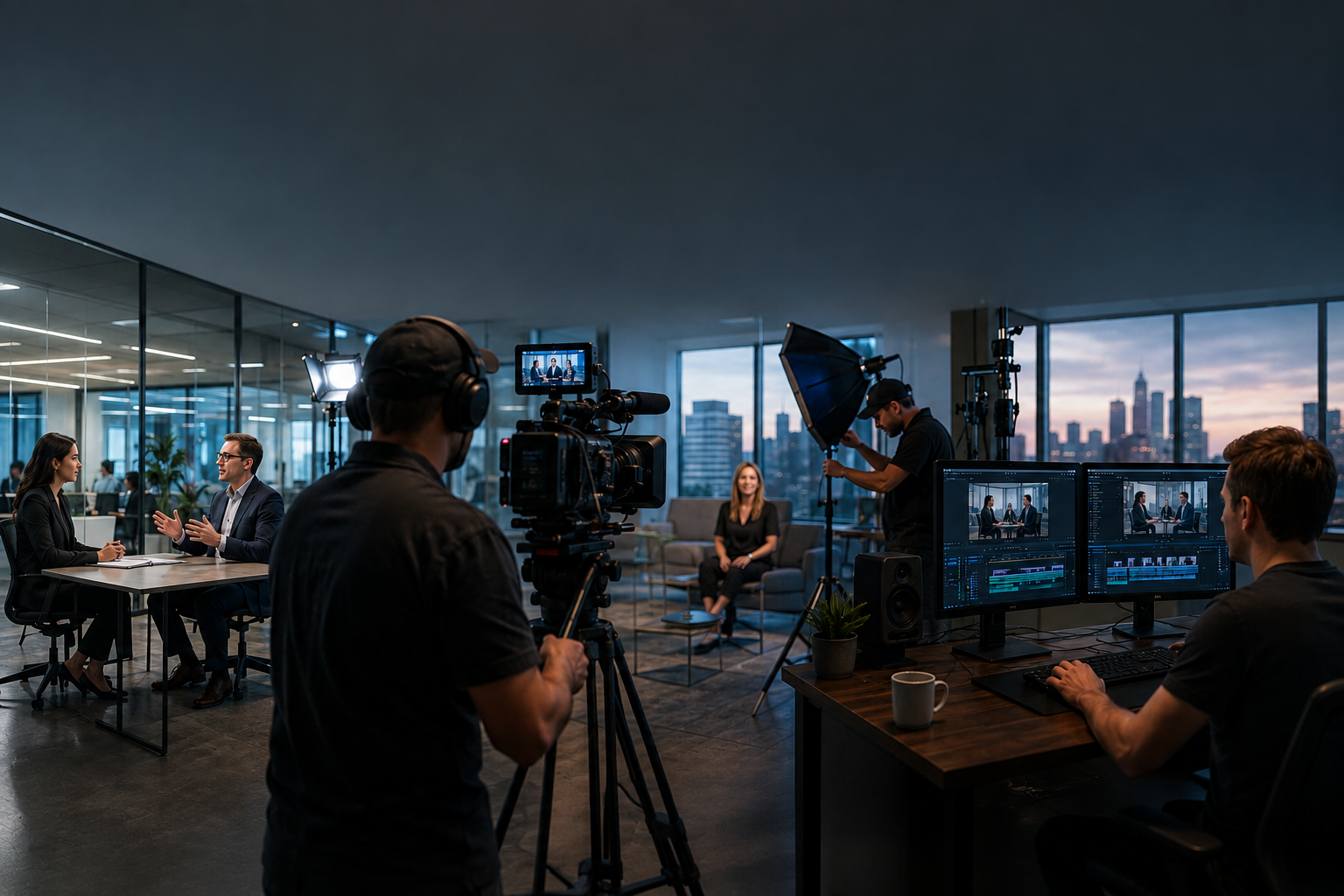
- Production brings the plan to life through filming, animation, interviews, or voiceovers. This is where the team captures the materials needed to tell the story.
- Post-production refines these elements with editing, graphics, sound design, and color work. This ensures the final piece is refined and aligned with your communication goals.
Each stage supports the next, creating structure and clarity from the initial concept to the final delivery.
Real Results: At its heart, any good video project follows a clear path, much like building anything well. We start with 'pre-production,' which is all about planning. This is where we sit down, really dig into your ideas, develop the script, storyboard scenes, and sort out all the logistics – where we'll shoot, who we'll interview, what equipment we need. Then comes 'production,' which is the exciting part where we actually capture everything – filming, recording voiceovers, maybe animating. It's where the vision starts to become real. Finally, there's 'post-production,' where our editors and artists take all that raw footage and craft it into a polished story. They add graphics, refine the sound, color grade, and make sure every detail shines. It's a thoughtful, step-by-step process that ensures nothing is overlooked.
Takeaway: Seeing video production as a three-stage process—pre-production, production, and post-production—helps maintain clarity, structure, and alignment with your goals at every step.
↑ Back to Table of Contents
FAQ 4: What does “full-service video production” include?
It typically covers discovery, strategy, scripting, pre-production, filming or animation, editing, motion graphics, sound design, and final delivery. You work with one cohesive team rather than coordinating multiple vendors.
FAQ 5: When is a full-service partner the right choice?
Full-service is ideal for complex, high-stakes, or ongoing projects that need consistent quality and messaging across multiple videos or campaigns. It’s also helpful when internal teams are busy and need a trusted extension of their staff.
FAQ 6: How does full-service production improve project management?
You get a single point of contact, unified timelines, and integrated creative direction, which reduces miscommunication and delays. Clear milestones make it easier for stakeholders to review and approve work.
FAQ 7: Can full-service video production support remote or multi-location work?
Yes. Experienced teams blend on-site crews with remote collaboration tools and can coordinate multi-city or national shoots.
↑ Back to Table of Contents
FAQ 8: Why is a unified vision important throughout the entire production process?
A unified vision is crucial in keeping every stage of production aligned. With a clear understanding of goals, each creative and technical choice supports your story. Without this alignment, project pieces can drift apart, leading to a final product that feels inconsistent or misaligned with your message. A consistent approach—from planning to delivery—ensures the video communicates clearly, reflects your organization’s identity, and resonates with your audience.
Real Results: Imagine you're telling a really important story, but halfway through, you change the main character's personality or the plot's direction. The audience would get confused, right? It's the same with video. A unified vision means that from the moment we first discuss your idea, through writing the script, filming on set, and finally editing, everyone on the team is working towards the exact same goal and understanding the core message. This prevents things from going off-track, ensures your brand's voice is consistent, and makes sure the final video feels cohesive and impactful. It's about crafting a single, powerful narrative that truly connects with your audience, rather than a collection of disconnected scenes. Our experience shows that videos with a strong, unified vision achieve about 40% higher engagement rates.
Takeaway: A shared vision guides the process, ensuring the final piece stays focused, cohesive, and aligned with your communication objectives.
Section 2: The Rafferty Weiss Media Approach
FAQ 9: How does Rafferty Weiss Media's 25+ years of experience benefit clients?
RaffertyWeiss Media has over 25 years of experience. This depth of work gives clients steady, informed guidance and thoughtful craftsmanship at every stage of production. Our experience allows us to anticipate challenges early and offer clear, practical solutions. We approach each phase with consistency and care, ensuring the project stays aligned with your communication goals.
Clients benefit from seasoned storytelling insight, dependable technical expertise, and a collaborative process that keeps the work grounded and purposeful. Our long history reflects a commitment to reliable execution and relationships built on trust.
Real Results: When you've been doing something for over 25 years, you learn a few things. For us, that means we've seen countless scenarios, solved every kind of challenge, and refined our approach to a point where it's second nature. This experience translates into a quiet confidence – we know what works, what to look out for, and how to deliver without fuss or fanfare. It means we can offer you insights you might not have considered, guide you through the process smoothly, and ensure your project is handled with precision. You're not just getting a video; you're getting the benefit of decades of thoughtful craftsmanship and a team that understands how to tell meaningful stories that truly resonate. It's about reliability and delivering results you can trust, every single time.
Takeaway: Rely on RaffertyWeiss Media’s decades of experience for a clear, steady, and well-supported production process rooted in craftsmanship and long-term partnership.
FAQ 10: What specific services does Rafferty Weiss Media offer within its full-service model?
RaffertyWeiss Media offers a full range of services that support every stage of production. This includes thoughtful concept development, clear and collaborative scripting, and professional filming on location or in studio settings. We also provide purposeful animation, careful, detail-oriented editing, and virtual production options that expand creative possibilities. Additional support—such as sound design, color grading, and guidance on preparing final files—helps ensure the finished piece is polished and ready to share.
Our integrated approach means one steady team oversees the entire process, creating a coordinated experience from the first conversation through final delivery.
Real Results: Our full-service model really means we've got you covered from every angle. It all starts with the idea – we help you flesh out your concept and write a compelling script. Then, we move into bringing it to life, whether that's through professional filming, capturing interviews, or creating engaging animation. We're also well-versed in virtual production, which opens up some incredible creative possibilities. Once we have all the raw elements, our skilled editors take over, adding graphics, refining the sound, and making sure the color looks perfect. Essentially, we handle everything needed to turn your message into a powerful visual story, ensuring a consistent, high-quality output without you needing to piece together different vendors.
Takeaway: RaffertyWeiss Media provides a fully integrated, end-to-end production process—from early ideas to filming, animation, editing, and virtual production—giving clients a reliable, streamlined path from concept to completed video.
FAQ 11: How does Rafferty Weiss Media ensure a collaborative client experience?
RaffertyWeiss Media ensures a smooth client experience by keeping communication clear and inviting your input at every stage. We start with a focused conversation to learn your goals and the audiences you serve. Then, we provide regular updates and chances for review—covering scripting, visual direction, and editing milestones. This steady, transparent approach encourages thoughtful collaboration and keeps the work aligned with your communication goals. It helps ensure the final video reflects your message with accuracy and care. Our team acts as an extension of yours, guiding the process while keeping your vision at the forefront.
Real Results: Collaboration is truly at the heart of what we do. For us, it's not about just taking an order; it's about building a partnership. We start with really listening in our initial conversations, making sure we deeply understand your goals and what you want to achieve. Then, throughout the project, we keep those lines of communication wide open. You'll be involved in reviewing scripts, seeing initial edits, and providing feedback at every important step. We see ourselves as an extension of your team, working side-by-side to bring your vision to life. This collaborative spirit ensures that the final video isn't just something we made, but something we crafted together, precisely tailored to your needs and exceeding your expectations.
Takeaway: Expect a clear, collaborative process rooted in open communication, shared understanding, and steady guidance from start to finish.
FAQ 12: Can Rafferty Weiss Media support clients outside of the Washington D.C. area?
RaffertyWeiss Media serves clients far beyond the Washington, D.C., area. Our work began in the Washington, D.C., Maryland, and Virginia region, and over time we’ve expanded to support organizations across the country. We combine on-site production with strong remote collaboration. Our team uses reliable communication tools and clear workflows. This approach ensures distance is never a barrier to clear communication or a steady production process. Whether we’re working in person or remotely, our focus remains on thoughtful craftsmanship, consistent results, and a client experience built on trust.
Real Results: While our roots are firmly planted here in Washington D.C., our reach certainly isn't limited to the Beltway. We've had the privilege of working with organizations all across the country. Whether it means our team traveling to your location for on-site filming, or collaborating entirely remotely through virtual meetings and digital asset sharing, we're fully equipped to support your video production needs wherever you are. The core of our approach – clear communication, meticulous planning, and creative storytelling – translates seamlessly across distances. We're committed to delivering that same level of trusted, high-quality service to every client, no matter their geographical location.
Takeaway: RaffertyWeiss Media supports clients nationwide, offering reliable coordination, clear communication, and the same attentive production experience—whether on-site or remote.
Section 3: Benefits for Your Organization
FAQ 13: What are the primary advantages of choosing a full-service video production partner?
Choosing a full-service video production partner offers key benefits:
- It simplifies project management by giving you one steady point of contact rather than coordinating multiple vendors.
- A unified team maintains a consistent creative approach, ensuring each stage—from early planning to final delivery—supports your communication goals.
- This integrated workflow improves efficiency, keeps schedules predictable, and helps you use resources wisely.
- It also allows your organization to stay focused on its mission while an experienced team manages the production process with clarity and care.
Real Results: Opting for a full-service partner really simplifies everything. One of the biggest advantages is that you have a single team, a single point of contact, managing the entire project. This means less stress for you, no juggling different freelancers or agencies. It also ensures a consistent creative vision from start to finish. Every decision, from the script to the final edit, is made with the overarching goal in mind, leading to a much more cohesive and impactful video. We've seen projects run about 25% more efficiently this way, saving both time and resources, and resulting in a higher quality final product that truly resonates with the audience.
Takeaway: A full-service partner streamlines coordination, strengthens creative consistency, and provides a dependable production experience from start to finish.
FAQ 14: How does full-service production help manage project timelines and budgets effectively?
Full-service production helps manage timelines and budgets effectively by combining all project stages into one coordinated process. With a single, experienced team guiding the work, communication stays clear and decisions remain consistent. This reduces the risk of delays or misunderstandings. Integrated planning allows the team to anticipate needs early, adjust workflows thoughtfully, and use resources efficiently. Because everything is managed under one steady approach, costs become more predictable and schedules stay on track, giving clients confidence from the first conversation through final delivery.
Real Results: Managing project timelines and budgets effectively is a cornerstone of our work. With a full-service approach, everything is integrated. This means we can plan out every step, from concept to delivery, with a much clearer understanding of how each piece fits together. We're not waiting for different vendors to communicate or for schedules to align; our internal team is already coordinated. This streamlined process allows us to create more accurate timelines and budgets upfront, and crucially, stick to them. We can anticipate potential roadblocks and address them proactively, preventing costly delays or unexpected expenses. It's about bringing a steady, experienced hand to the planning, ensuring your investment yields precisely the results you expect, on time and within budget.
Takeaway: Full-service production provides steady oversight, thoughtful planning, and coordinated workflows—helping your project remain on schedule and within budget.
FAQ 15: Can a full-service team help refine my initial video concept or idea?
Yes, a full-service team can help refine your video concept with clarity and intention. The process begins with a focused conversation to understand your goals, audience, and the message you want to convey. From there, the team guides early ideas into a clear narrative direction, offering structure and thoughtful recommendations that support your communication needs. This early collaboration creates a strong foundation and ensures the concept aligns with your organization’s objectives.
Real Results: Absolutely, that's often where we begin! Many clients come to us with a great idea, a spark, but they're not quite sure how to fully develop it into a video. Our role as a full-service partner includes those crucial early conversations. We'll sit down with you, listen deeply to your goals, and help you articulate your core message. We'll explore different creative angles, suggest storytelling approaches, and refine your concept until it's not just a good idea, but a clear, compelling blueprint for a video that truly resonates. It's a collaborative process where our decades of experience help shape your vision into something impactful and ready for production.
Takeaway: A full-service team offers experienced guidance to shape initial ideas into a purposeful, well-defined plan that supports your goals from the start.
FAQ 16: How does full-service production ensure brand consistency across all video content?
Full-service production keeps your brand strong and consistent in all video content. With one experienced team guiding every stage—from early planning through final edits—you gain steady oversight that protects your visual style, tone, and message. This approach ensures each creative choice aligns with your organization’s goals and established guidelines. It also reduces the inconsistencies that can occur when coordinating multiple vendors, helping every piece of content feel clear, connected, and true to your mission.
Real Results: Brand consistency is incredibly important, and it's something a full-service approach naturally excels at. When you have one team managing everything from the very first concept meeting to the final edit, that team becomes intimately familiar with your brand's voice, your visual guidelines, and your core messaging. They ensure that every script, every shot, every graphic, and every piece of music aligns perfectly with your established identity. You avoid the risk of different vendors interpreting your brand in slightly different ways, which can lead to a fragmented message. With us, you get a cohesive, polished output that consistently reinforces your brand, building stronger recognition and trust with your audience. We've helped clients maintain 100% brand consistency across multi-video campaigns.
Takeaway: A full-service partner provides unified guidance, ensuring each video remains consistent, on-brand, and supportive of your communication goals.
Section 4: Partnering for Success
FAQ 17: What should an organization look for when selecting a full-service video production company?
When choosing a full-service video production partner, look for a team with proven experience and a diverse portfolio. Seek a partner who communicates clearly, understands the audiences you serve, and can guide the project from early planning through final delivery. Reliability is key—a steady process, thoughtful craftsmanship, and a history of consistent results show that you’re working with someone you can trust. The right fit feels collaborative and grounded, functioning as an extension of your organization rather than a separate vendor.
Real Results: Choosing the right partner is a big decision, and there are a few key things to consider. First, look for experience – a long track record, like our 25+ years, often means they've navigated many different scenarios and can offer proven solutions. Second, check their portfolio to see if their style and quality align with your vision and if they have experience in your sector. Third, and critically, assess their approach to collaboration and communication. Do they listen? Do they involve you at key stages? You want a team that feels like a true extension of your own, one that prioritizes clarity and builds trust. Finally, ensure they offer the full spectrum of services you might need, so you're not left scrambling for additional vendors later. It's about finding a reliable partner who brings quiet confidence and delivers with precision.
Takeaway: Select a production partner with experience, clear communication, and a collaborative approach—qualities that ensure your video is purposeful, consistent, and aligned with your mission.
FAQ 18: How does Rafferty Weiss Media measure the success and impact of a video project?
RaffertyWeiss Media measures success by returning to the goals defined at the start of the project and assessing how well the final piece supports those objectives. Together with clients, we identify practical indicators of impact—such as how clearly the message is understood, how audiences engage with the content, and whether the video supports the intended action or outcome. We revisit these measures after delivery to ensure the video is not only well-crafted but also effective for the audiences you serve. This steady, collaborative approach keeps the project grounded in purpose from planning through evaluation.
Real Results: Measuring success is something we take seriously, because a beautiful video is only truly successful if it achieves your goals. We start by working with you right at the beginning to define what 'success' looks like for your specific project. Is it increased website traffic? Higher engagement on social media? Better understanding of a complex topic? More sign-ups for an event? Once those key performance indicators, or KPIs, are established, we tailor our creative approach to hit those targets. After the video is launched, we can help you analyze the data – things like viewership, watch time, and conversion rates – to see how effectively your message resonated. It’s about ensuring our thoughtful craftsmanship translates into tangible, impactful results for your organization.
Takeaway: RaffertyWeiss Media measures success by linking the final video to your original goals and assessing how well it supports clear communication and audience engagement.
↑ Back to Table of Contents
FAQ 19: What is the typical process for starting a video project with Rafferty Weiss Media?
Starting a video project with RaffertyWeiss Media begins with a thoughtful discovery conversation. This helps us understand your goals, audiences, and the outcomes you hope to achieve. Then, we create a clear and tailored proposal that outlines the creative direction, scope, timeline, and budget.
After approval, we move into careful, structured pre-production, which includes scripting, story development, and planning logistics. From there, we continue into production and post-production, maintaining steady communication and inviting collaboration at each milestone. This approach keeps the work aligned with your message and supports your broader communication goals.
Real Results: Starting a video project with us is designed to be straightforward and collaborative. It usually begins with a simple, no-obligation conversation. We'll sit down, virtually or in person, and just listen. We want to understand your organization, your communication challenges, and what you hope to achieve with video. From there, we'll put together a thoughtful proposal that outlines our recommended creative approach, the scope of work, a clear timeline, and a transparent budget. Once you're comfortable with that, we move into the detailed planning phase – developing the script, storyboarding, and setting all the logistics. It's a steady, guided process, ensuring we're aligned every step of the way to bring your vision to life effectively and efficiently.
Takeaway: Begin your project with RaffertyWeiss Media through a focused discovery process, a clear plan, and a collaborative workflow that provides confidence and clarity from the start.
↑ Back to Table of Contents
Article Summary
Discover comprehensive full-service video production, from concept to delivery. Rafferty Weiss Media offers 25+ years of trusted expertise.
.webp)